Contemporary Evangelicalism in an attempt to make the gospel less threatening and more relevant has inadvertently muddled the message of the gospel. Evangelicalism is rapidly losing the ability to proclaim the message of saving faith with any clarity and boldness. Central to the gospel is the cross and it seems that there is a growing reluctance for the cross to be preached from the pulpits of our churches. To put it in a term that John MacArthur used as the title for his book, the church is “Ashamed of the Gospel”.
But the cross is central to the preaching of the gospel, and its emphasis in the presentation of the message of saving faith is crucial. However, the cross is offensive to the world. Scripture explicitly tells us that it is “foolishness to those who are perishing”. (1 Corinthians 1:18) Yet without the preaching of the cross, you really do not have the gospel at all. Any attempt at toning down or making it less offensive robs it of its power. The message of the cross is death, the death that Christ had to suffer to atone for the sins of man. Paul summarizes the key tenets of the gospel in 1 Corinthians 15:1-5.
“1Now I make known to you, brethren, the gospel which I preached to you, which also you received, in which also you stand,
2by which also you are saved, if you hold fast the word which I preached to you, unless you believed in vain.
3For I delivered to you as of first importance what I also received, that Christ died for our sins according to the Scriptures,
4and that He was buried, and that He was raised on the third day according to the Scriptures,
5and that He appeared to Cephas, then to the twelve.”
(1 Corinthians 15:1-5, NASB)
Central to the gospel is the fact that Christ died for our sins and was resurrected on the third day. Christ died for our sins, not to restore our self esteem or merely to give us purpose in our lives. He did not come to merely carry our burdens in life. He died to provide the perfect sacrifice for the atonement of our sins. To preach a gospel that deemphasizes the centrality of the cross essentially makes the message of saving faith powerless. We must understand that we are guilty of sinning against a just and holy God and that Christ suffered greatly in our place in order for us to enjoy a restored relationship with God the Father. To diminish the significance of the cross grieves God.
“The Great Commission is not a marketing manifesto...We gain nothing but God’s displeasure if we seek to remove the offense of the cross.”
(John MacArthur; “Ashamed of the Gospel: When the Church Becomes Like the World”, Pg. 18)
But even more disturbing are the latest attempts at re-thinking or to use a term gaining in popularity today, “re-imagining” the cross. I will be posting more on this topic in future posts.
Thursday, March 30, 2006


Sunday, March 19, 2006
Gilbert Bilezikian going the “emerging” route?
In a post on the Pyromaniacs this last weekend, Phil Johnson (the original “Pyromaniac”) had this link to an article interviewing Gilbert Bilezikian who was stating that the Western church is on the brink of extinction. Bilezikian was cofounder along with Bill Hybels of Willow Creek Community Church. He was stating that the biggest downfall was the lack of community among believers. According to Bilezikian, “After coming to Christ, our next step is to be involved in community.”
He goes on in the article to state that the church has been overtaken with individualism and the pursuit of material gain, breeding a sense of self-sufficiency. Having any meaningful family life is nearly impossible as everyone is pulled in different directions. He points to the issue of models of leadership that are more akin to that of a corporate CEO. These issues are among those that are contributing to making the church irrelevant.
Bilezikian then points to the fact that the New Testament church is to have a strong basis on community. He bemoans the fact that the church has become “institutionalized”. (He's beginning to sound like our “emerging” friends)
Bilezikian said that “The bane of the church is that it becomes worldly. Instead of imparting the Word and becoming an agent of change, it adopts the values of the world and integrates them into its structures and life."
But who encouraged the church in this direction? Isn’t the Willow Creek model just as he describes here? Isn’t he one of the “gurus” who helped formulate this strategy? Looking at the popular model that he helped create, I for one would not want to follow any newfangled concoction that he would recommend.
I would agree that the Bible certainly describes believers being in community with one another. I believe that this is clearly taught in Scripture. Believers looked out for the needs of one another and provided spiritual support and encouragement (Acts 2:42-47; Acts 4:32-37; Hebrews 10:24-25; Philippians 2:1-4)
But this community must be based on the truth of Scripture. The believers encouraged each other with the truth of God’s Word.
Bilezikian apparently is hopeful for the church, pointing “to a community movement which, he says, appeared at the end of the 20th century and has taken hold. These are churches in which lay people and clergy are raising basic questions about the identity of the Church, and about the definition of its workings.”
“It seems the Holy Spirit is operating a kind of quiet revival which is primarily aimed at recovering the dynamics of the Church of the Book of Acts, which results in renewed incentives for outreach in a pagan world.”
Gee, I wonder what “movement” he is referring to. He does not use the term “emerging”, but this certainly seems to be the movement he is describing. And it seems as if he is willing to jump from one popular bandwagon to another. I can appreciate the zeal to want to reach out to the pagan world, but we must be certain that this is carried out according to the truth of Scripture.
Since Bilezikian believes that “The bane of the church is that it becomes worldly" and "adopts the values of the world and integrates them into its structures and life“ , I wonder what he thinks the end result of this new movement will be?
It is good to raise questions about how the church should function, but let’s go back to Scripture and find out how the ministry should be carried out. Interpret the Bible in its normal historical-grammatical sense and find out what God’s definition of the church is.
I certainly appreciate the fact that the emerging church seeks to restore a sense of community in the church. If there is anything that is positive about the movement, the realization that community is important is a good thing. But deemphasizing or distorting the truth of Scripture creates a counterfeit sense of community, not a biblically based community. Long ago I felt that the church desperately needed a return to more of a sense of community. So many churches were just “program” driven. And I know of some churches that sensed that need as well. But they also understood that the community must center on biblical truth, not “deconstruct” it and refashion it according to our whims. So many of these churches set out to do just that; to create a community based on Scriptural accountability and discipleship according to the truth of Scripture.
As far as recovering the dynamics of the book of Acts, I wonder if the “emergent” types realize that those believers in Acts embraced the “apostles’ teaching” that was based on propositional truth that they so disdain? (Acts 2:42)
Yes, the church certainly needs to correct its thinking in certain areas, but there is no need to “reinvent” or “re-imagine” the church. And the last thing that we need is another popular movement to jump on board. It seems that everyone is desperately searching for that silver bullet to revitalize the church, eager to jump on the next purpose-driven frenzy. The fact is that there is no replacement for the solid teaching of God’s Word and a willingness to obey it. We don’t need another model to emulate or another way of doing church, but we just need to be the church according to God’s Word.
He goes on in the article to state that the church has been overtaken with individualism and the pursuit of material gain, breeding a sense of self-sufficiency. Having any meaningful family life is nearly impossible as everyone is pulled in different directions. He points to the issue of models of leadership that are more akin to that of a corporate CEO. These issues are among those that are contributing to making the church irrelevant.
Bilezikian then points to the fact that the New Testament church is to have a strong basis on community. He bemoans the fact that the church has become “institutionalized”. (He's beginning to sound like our “emerging” friends)
Bilezikian said that “The bane of the church is that it becomes worldly. Instead of imparting the Word and becoming an agent of change, it adopts the values of the world and integrates them into its structures and life."
But who encouraged the church in this direction? Isn’t the Willow Creek model just as he describes here? Isn’t he one of the “gurus” who helped formulate this strategy? Looking at the popular model that he helped create, I for one would not want to follow any newfangled concoction that he would recommend.
I would agree that the Bible certainly describes believers being in community with one another. I believe that this is clearly taught in Scripture. Believers looked out for the needs of one another and provided spiritual support and encouragement (Acts 2:42-47; Acts 4:32-37; Hebrews 10:24-25; Philippians 2:1-4)
But this community must be based on the truth of Scripture. The believers encouraged each other with the truth of God’s Word.
Bilezikian apparently is hopeful for the church, pointing “to a community movement which, he says, appeared at the end of the 20th century and has taken hold. These are churches in which lay people and clergy are raising basic questions about the identity of the Church, and about the definition of its workings.”
“It seems the Holy Spirit is operating a kind of quiet revival which is primarily aimed at recovering the dynamics of the Church of the Book of Acts, which results in renewed incentives for outreach in a pagan world.”
Gee, I wonder what “movement” he is referring to. He does not use the term “emerging”, but this certainly seems to be the movement he is describing. And it seems as if he is willing to jump from one popular bandwagon to another. I can appreciate the zeal to want to reach out to the pagan world, but we must be certain that this is carried out according to the truth of Scripture.
Since Bilezikian believes that “The bane of the church is that it becomes worldly" and "adopts the values of the world and integrates them into its structures and life“ , I wonder what he thinks the end result of this new movement will be?
It is good to raise questions about how the church should function, but let’s go back to Scripture and find out how the ministry should be carried out. Interpret the Bible in its normal historical-grammatical sense and find out what God’s definition of the church is.
I certainly appreciate the fact that the emerging church seeks to restore a sense of community in the church. If there is anything that is positive about the movement, the realization that community is important is a good thing. But deemphasizing or distorting the truth of Scripture creates a counterfeit sense of community, not a biblically based community. Long ago I felt that the church desperately needed a return to more of a sense of community. So many churches were just “program” driven. And I know of some churches that sensed that need as well. But they also understood that the community must center on biblical truth, not “deconstruct” it and refashion it according to our whims. So many of these churches set out to do just that; to create a community based on Scriptural accountability and discipleship according to the truth of Scripture.
As far as recovering the dynamics of the book of Acts, I wonder if the “emergent” types realize that those believers in Acts embraced the “apostles’ teaching” that was based on propositional truth that they so disdain? (Acts 2:42)
Yes, the church certainly needs to correct its thinking in certain areas, but there is no need to “reinvent” or “re-imagine” the church. And the last thing that we need is another popular movement to jump on board. It seems that everyone is desperately searching for that silver bullet to revitalize the church, eager to jump on the next purpose-driven frenzy. The fact is that there is no replacement for the solid teaching of God’s Word and a willingness to obey it. We don’t need another model to emulate or another way of doing church, but we just need to be the church according to God’s Word.
Thursday, March 09, 2006
Environmentalism and the Church.
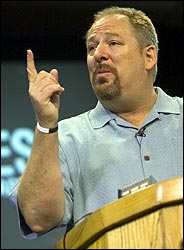
Rick Warren and 85 other evangelical leaders are now part of a movement in evangelicalism to raise awareness of environmental concerns, particularly with global warming. Warren along with the other 85 leaders have released a statement entitled "Climate Change: An Evangelical Call to Action". However, 22 leaders in the National Association of Evangelicals (NAE) urged Ted Haggard, the president of that organization not to take an official position on global warming. Some of these leaders include Richard Land, Chuck Colson and David Barton. This is due to the skepticism as to the actual cause, extent and remedy for the problem. This skepticism is far reaching and includes scientists who recognize that average global temperatures have risen over the years, but are not unanimous in their conclusions that human generated CO2 emissions are the culprit. Scientists also do not agree on the extent of the effects and whether they will actually end up being catastrophic. Furthermore, there is doubt that cutting these CO2 emissions will be successful in reversing the warming trend. In fact, drastic measures may actually create economic harm and end up creating hardship for the poor.
What is amazing is the voracity with which people are willing to acknowledge that global warming is caused by human means. In fact, an MIT meteorologist compared it to a ‘religious belief’. Since people seem to automatically assume the consensus of all scientists on the issue, they simply believe it without actually trying to understand all of the facts.
He was not far off in his assessment. In fact, what is probably the most troubling is the actual religious implications attached to radical environmentalism. And now evangelicals are being enticed to jump on the bandwagon.
This push for the church to get involved with environmental concerns began some time ago. The idea was beginning to be promoted in the mid to late 1990s by men like Bill Easum. Easum is a church consultant who co-founded Easum, Bandy and Associates. In an article published in July 1996, Easum discusses the importance of ecology and how this will be “one of the major ministries for the first half of the twenty-first century.” He went on to say that “One of the key issues facing Christianity at the upcoming turn of the century is how to reach a generation turned off by Protestantism's dualistic approach to spirit and matter.” He also claims that it is this neglect of the environment that is causing the current generation to reject Christianity.
But what is most problematic is the tendency to promote a sort of pantheism. According to Easum, “Christianity must rediscover the interconnectedness and sacredness of all life if it is to reach them… Perhaps it's time for Protestants to think of the Earth as the "Third Sacrament."” Easum advocates raising the “care and feeding of the Earth…to the same stature as Baptism and Holy Communion.”
Easum goes on to say that “We would all be more respectful of the environment if we thought of it as a living organism instead of as just a planet on which life exists. I think the day will come when quantum physics will give us more than hints that everything, including the planet, is connected to the same life source.”
Easum further comments that “We could begin to put an end to the heresy that views some things as sacred and some things secular. Failure to understand the importance of this connection will be fatal to churches in the twenty-first century.”
While Bill Easum is not really officially classified as part of the “emerging” movement; some of the elements of postmodernism are permeating his philosophy. Environmentalism is high on the list of priorities in the emerging “church” movement. This is how postmodernism is making inroads into mainstream evangelicalism. This is why postmodernism really is not just an issue isolated to the emerging crowd, but has become very much a part of the culture today and is quickly seeping into evangelicalism.
This pantheistic tendency to make environmentalism synonymous with worship is rooted in paganism. Observe the following quote from a website promoting what is called scientific pantheism:
"When you look at the night sky or at the images of the Hubble Space Telescope, are you filled with feelings of awe and wonder at the overwhelming beauty and power of the universe?
When you are in the midst of nature, in a forest, by the sea, on a mountain peak - do you ever feel a sense of the sacred, like the feeling of being in a vast cathedral?
Do you believe that humans should be a part of Nature, rather than set above it?
If you can answer yes to all of these questions, then you have pantheistic leanings…
At the heart of pantheism is reverence of the universe as the ultimate focus of reverence, and for the natural earth as sacred.”
“Scientific Pantheism: Reverence of Nature and Cosmos”
by Paul Harrison
“A religion old or new, that stressed the magnificence of the universe as revealed by modern science, might be able to draw forth reserves of reverence and awe hardly tapped by the conventional faiths. Sooner or later, such a religion will emerge.”
Carl Sagan, Pale Blue Dot (1994)
It appears that we are well on our way towards the final false religious system described in Revelation 17 as “Mystery Babylon”.
The latest move by prominent Evangelicals is further evidence that we are moving further and further from biblical wisdom and understanding in the church. We are losing sight of the mission that the Lord has commanded us to carry out, becoming sidetracked by issues that the church is not really called to be directly involved in.
I am all for Christians being involved in civic duty and to be involved in their communities where they have the opportunity to be salt and light to the world. But I cannot see from Scripture where the church itself is called to become a global crusader to stomp out environmental problems and social ills. I further shudder at all the religious connotations associated with radical environmentalism and how this will influence the church.
Thursday, March 02, 2006
A False “Vision”?
I have wanted to comment further on some of the charges made against Calvinism. I commented last week on Ergun Caner’s comments left on the Founder’s blog slamming Cavinism. In that post I also mentioned how I listened to a sermon by a guest speaker for a Bible Conference at the church I attended in my home town, where he listed Calvinism as one of the beliefs (or as he put it, “visions”) that were problematic in the church today. The theme of the two sermons that he preached were on the church establishing a vision or focus for the ministry. The whole issue of listing Calvinism as a false “vision” really irritated me because it is just a display of ignorance of church history and ignorance of the text of Scripture. Not once did he explore the passages of Scripture that dealt with predestination and election, but loosely referred to the concepts in such a way as to present them in a negative light. What he discussed had more to do with hyper-Calvinism that is really only held by a relative minority, not orthodox or moderate Calvinism. He mentioned the common misperception that if you believe these doctrines, that there is no reason to be involved in evangelism. He also made some outlandish statements such as embracing Calvinism inevitably leads to postmillennialism and amillennialism, ultimately leading to political and social activism.
First of all, the charge that those who embrace reformed theology see no reason to evangelize is unwarranted. Charles Spurgeon, who adamantly embraced the tenets of Calvinism, also had a heart and compassion for the lost. “Oh, my brothers and sisters in Christ, if sinners will be damned, at least let them leap to hell over our bodies; and if they will perish, let them perish with our arms about their knees, imploring them to stay, and not madly to destroy themselves. If hell must be filled, at least let it be filled in the teeth of our exertions, and let not one go there unwarned and unprayed for.” (C.H. Spurgeon, “The Wailing of Risca”). Alistair Begg just went through a series on evangelism on his radio program “Truth for Life”, and he falls under the category of Reformed as well. I do not know of anyone personally who embraces Reformed theology and yet does not think evangelism is important.
Another outlandish statement was that the natural outgrowth of Calvinism is postmillennialism and amillennialism. Really? Yes, there are a number of people who do embrace those millennial views, but certainly not everyone does. In fact, while a large number do, there are plenty of others who embrace pre-millennialism including myself. And I am not about to go postmillennial or amillennial any time soon. How about John MacArthur? He is pre-millennial in his views of eschatology and yet embraces Calvinism. There are a wide variety of beliefs on eschatology in the Reformed camp. But I do not see how Calvinism ultimately leads to these millennial views or to any particular millennial view for that matter.
But the charge that Calvinism will ultimately lead you to become preoccupied with social reform and political activism is the one that really got me. Huh? Really? Yes, certainly there are some that are, but let’s look at evangelicalism today and see how many are preoccupied with political activism and social reform. Most of the key people involved in what we call political activism are certainly not associated with Reformed theology. Look at James Dobson for example. Or look at Rick Warren and how he is now preoccupied with environmental and social concerns. In fact, many of the men that I am familiar with who are Calvinists are opposed to political and social activism. John MacArthur has taught a series against political activism. Steve Camp has also spoken out against political activism as well. Many others in the reformed camp have also been outspoken against these things, recognizing that Scripture does not teach that the church’s primary mission is social reform. So this is another charge that is totally unwarranted.
Many of the things that were mentioned were things that I would agree are detrimental to the church. However, to list Calvinism as something that is harming the church was absolutely absurd. One of the greater issues contributing to the weaknesses in evangelicalism is the overt pragmatism that has become so prevalent today and is rooted in full-blown Arminianism. But nothing was mentioned about that. A careful study of church history reveals almost invariably that when the church to turns to a synergistic view of salvation, the church is generally characterized by a sharp spiritual decline. Look what happened during the period of time leading up to the Great Awakening. Arminianism had taken root in the church and the spiritual fervor of the people waned. It was the straight forward preaching of men like Jonathan Edwards and George Whitefield that helped ignite the fire of the Great Awakening. And they were Calvinists.
How about the wholesale departure from biblical preaching and teaching? What about the preoccupation with experience over truth? Those are the real hindrance to the mission of the church today. Political activism and preoccupation with social issues and reform are certainly detrimental, but to tie these things to Calvinism is ridiculous.
First of all, the charge that those who embrace reformed theology see no reason to evangelize is unwarranted. Charles Spurgeon, who adamantly embraced the tenets of Calvinism, also had a heart and compassion for the lost. “Oh, my brothers and sisters in Christ, if sinners will be damned, at least let them leap to hell over our bodies; and if they will perish, let them perish with our arms about their knees, imploring them to stay, and not madly to destroy themselves. If hell must be filled, at least let it be filled in the teeth of our exertions, and let not one go there unwarned and unprayed for.” (C.H. Spurgeon, “The Wailing of Risca”). Alistair Begg just went through a series on evangelism on his radio program “Truth for Life”, and he falls under the category of Reformed as well. I do not know of anyone personally who embraces Reformed theology and yet does not think evangelism is important.
Another outlandish statement was that the natural outgrowth of Calvinism is postmillennialism and amillennialism. Really? Yes, there are a number of people who do embrace those millennial views, but certainly not everyone does. In fact, while a large number do, there are plenty of others who embrace pre-millennialism including myself. And I am not about to go postmillennial or amillennial any time soon. How about John MacArthur? He is pre-millennial in his views of eschatology and yet embraces Calvinism. There are a wide variety of beliefs on eschatology in the Reformed camp. But I do not see how Calvinism ultimately leads to these millennial views or to any particular millennial view for that matter.
But the charge that Calvinism will ultimately lead you to become preoccupied with social reform and political activism is the one that really got me. Huh? Really? Yes, certainly there are some that are, but let’s look at evangelicalism today and see how many are preoccupied with political activism and social reform. Most of the key people involved in what we call political activism are certainly not associated with Reformed theology. Look at James Dobson for example. Or look at Rick Warren and how he is now preoccupied with environmental and social concerns. In fact, many of the men that I am familiar with who are Calvinists are opposed to political and social activism. John MacArthur has taught a series against political activism. Steve Camp has also spoken out against political activism as well. Many others in the reformed camp have also been outspoken against these things, recognizing that Scripture does not teach that the church’s primary mission is social reform. So this is another charge that is totally unwarranted.
Many of the things that were mentioned were things that I would agree are detrimental to the church. However, to list Calvinism as something that is harming the church was absolutely absurd. One of the greater issues contributing to the weaknesses in evangelicalism is the overt pragmatism that has become so prevalent today and is rooted in full-blown Arminianism. But nothing was mentioned about that. A careful study of church history reveals almost invariably that when the church to turns to a synergistic view of salvation, the church is generally characterized by a sharp spiritual decline. Look what happened during the period of time leading up to the Great Awakening. Arminianism had taken root in the church and the spiritual fervor of the people waned. It was the straight forward preaching of men like Jonathan Edwards and George Whitefield that helped ignite the fire of the Great Awakening. And they were Calvinists.
How about the wholesale departure from biblical preaching and teaching? What about the preoccupation with experience over truth? Those are the real hindrance to the mission of the church today. Political activism and preoccupation with social issues and reform are certainly detrimental, but to tie these things to Calvinism is ridiculous.
Sunday, February 26, 2006
R.C. Sproul Interview with John MacArthur.
I ran across this interview with John MacArthur and R.C. Sproul on the Ligonier Ministries website. The MP3 download is located here next to the last download on the page. They were discussing some of the subject matter for the upcoming Ligonier Ministries National Conference in Orlando. The theme this year is “The Bride of Christ”. John MacArthur is one of the speakers and one of his messages will be “The Shepherd and His Flock”.
Much of what was discussed had to do with the issues facing the church today, primarily with the diminishing adherence to the biblical role of the pastor and the importance of Biblical preaching.
The chief duty of the pastor is tending the flock which entails feeding the congregation employing the systematic study, teaching and preaching of Scripture with the central goal of spiritual nourishment of the church. This is clearly evident in the Bible especially in passages such as John 21:15-17, Acts 20:28, 1 Peter 5:2.
This is what causes the congregation to grow to be spiritually mature and develops discernment so the people are not lead astray by various forms of false teaching. If there is one primary contributing factor that has been instrumental in opening up the church today to be vulnerable to deceptive teaching, it is the failure of the church to follow a biblical form of pastoral leadership and church ministry. As Dr. MacArthur put it in the interview, there has been a “Proliferation of in a sense inadequate and unbiblical ministry in the so-called church”. Too much emphasis has been placed on “success” that is really based on a business model rather than what Scripture describes as biblical ministry. R.C. Sproul also mentioned his experience where he had a seminary professor actually tell the students that they should not preach beyond an eighth grade level, even if you have a congregation of primarily college educated people. This certainly defies Scripture by not providing the “full counsel” of God. The preaching should be centered on the true spiritual needs of the people, not their perceived “felt” needs. Many of the tactics used today as MacArthur points out, merely “manipulates a superficial response that creates an illusion that they have connected with God.” This further leads people down the path of deception.
What was really astonishing is the story John MacArthur told of a church in southern California, that was trying to elect a committee of church members that would be responsible for preparing the sermons for the pastor! Certainly describes what Paul warned Timothy about concerning those “wanting to have their ears tickled, they will accumulate for themselves teachers in accordance to their own desires,” (2 Timothy 4:3, NASB)
Faulty, unbiblical leadership is certainly treacherous to the church.
Much of what was discussed had to do with the issues facing the church today, primarily with the diminishing adherence to the biblical role of the pastor and the importance of Biblical preaching.
The chief duty of the pastor is tending the flock which entails feeding the congregation employing the systematic study, teaching and preaching of Scripture with the central goal of spiritual nourishment of the church. This is clearly evident in the Bible especially in passages such as John 21:15-17, Acts 20:28, 1 Peter 5:2.
This is what causes the congregation to grow to be spiritually mature and develops discernment so the people are not lead astray by various forms of false teaching. If there is one primary contributing factor that has been instrumental in opening up the church today to be vulnerable to deceptive teaching, it is the failure of the church to follow a biblical form of pastoral leadership and church ministry. As Dr. MacArthur put it in the interview, there has been a “Proliferation of in a sense inadequate and unbiblical ministry in the so-called church”. Too much emphasis has been placed on “success” that is really based on a business model rather than what Scripture describes as biblical ministry. R.C. Sproul also mentioned his experience where he had a seminary professor actually tell the students that they should not preach beyond an eighth grade level, even if you have a congregation of primarily college educated people. This certainly defies Scripture by not providing the “full counsel” of God. The preaching should be centered on the true spiritual needs of the people, not their perceived “felt” needs. Many of the tactics used today as MacArthur points out, merely “manipulates a superficial response that creates an illusion that they have connected with God.” This further leads people down the path of deception.
What was really astonishing is the story John MacArthur told of a church in southern California, that was trying to elect a committee of church members that would be responsible for preparing the sermons for the pastor! Certainly describes what Paul warned Timothy about concerning those “wanting to have their ears tickled, they will accumulate for themselves teachers in accordance to their own desires,” (2 Timothy 4:3, NASB)
Faulty, unbiblical leadership is certainly treacherous to the church.
Sunday, February 19, 2006
Fired Up About Some Things.
I have read some things this past week that really had me “fired up”, but I have not had much time to articulate my thoughts. I have a final exam coming up this next week and had a final project presentation this week for school, so I have not had much time to write any posts. But I did want to take some time to comment on Dr. Ergon Caner’s comments on the Founders blog this week.
In a post concerning the possible nomination of Johnny Hunt for the presidency of the Southern Baptist Convention, there were many comments left in response that expressed concern for Hunt’s anti-Calvinist bias. Then Dr. Caner left some inflammatory comments deriding Calvinism in general. I could hardly believe what I was reading!
For those who may not be familiar with Johnny Hunt’s attitude toward Calvinism, let me just summarize that he is adamantly opposed to Calvinism to the point that he apparently let one of his pastoral staff go due to that staff member’s adherence to Calvinistic theology! (Scroll through the comments and read the comment left by a former staff member, Scott) It could be that his election to the SBC may create such strife as to divide the convention over this issue.
It really bothers me when I see solid doctrine attacked, especially in a denomination that has made great strides over the years to purge itself from liberal theology. While there are further reforms that need to take place, I believe the SBC has come a long way and I would not want to see the convention derailed. I currently do not attend an SBC church. However, the church that I currently attend considered joining the SBC when we were just starting as a new church plant six years ago, and I would have backed the decision. The decision was made not to join the SBC at that time; however the pastoral staff indicated that they may reconsider the decision at a later date.
But the issue of bashing Calvinism really gets irritating. Most of the controversy centers on a misunderstanding of Reformed Theology. At the same time that I read Dr. Caner’s comments, I was listening to a sermon that I downloaded by a guest speaker from the church I attended in the town where I grew up. There were actually two sermons that this particular speaker preached at a Bible conference there. Most of what he said was good and right on target, but the second sermon really blew me away. In the second sermon, he cited three primary schools of thought that he claimed were aberrant thinking and were detrimental to the health of the church. Guess what the first one was. He listed Calvinism as the first one! It was all I could do to keep from yelling out loud, “NO, NO, NOOOO!!!” while pounding my fist on the desk. And, as you can imagine, he mentioned one of the common misconceptions that Calvinists are weak on evangelism due to a fatalistic view of predestination! Dr. Caner made the same charge of weak evangelism in his comments on Founders. It always seems that these misconceptions are due to a lack of understanding of Reformed theology and what people generally object too is usually an extreme view held by a relatively small minority of Calvinists. I too, am against what would be called hyper-Calvinism. But those who hold to a more orthodox Calvinism do not adhere to such extremes.
On the contrary, I can’t think of anything more detrimental to the health of the church today than the current barrage of pragmatism that for all essential purposes is rooted in full-blown Arminianism. I hope to comment more on this soon.
Well, that is all I have time to write for now. I just had to get that off of my chest! I feel better already :)
In a post concerning the possible nomination of Johnny Hunt for the presidency of the Southern Baptist Convention, there were many comments left in response that expressed concern for Hunt’s anti-Calvinist bias. Then Dr. Caner left some inflammatory comments deriding Calvinism in general. I could hardly believe what I was reading!
For those who may not be familiar with Johnny Hunt’s attitude toward Calvinism, let me just summarize that he is adamantly opposed to Calvinism to the point that he apparently let one of his pastoral staff go due to that staff member’s adherence to Calvinistic theology! (Scroll through the comments and read the comment left by a former staff member, Scott) It could be that his election to the SBC may create such strife as to divide the convention over this issue.
It really bothers me when I see solid doctrine attacked, especially in a denomination that has made great strides over the years to purge itself from liberal theology. While there are further reforms that need to take place, I believe the SBC has come a long way and I would not want to see the convention derailed. I currently do not attend an SBC church. However, the church that I currently attend considered joining the SBC when we were just starting as a new church plant six years ago, and I would have backed the decision. The decision was made not to join the SBC at that time; however the pastoral staff indicated that they may reconsider the decision at a later date.
But the issue of bashing Calvinism really gets irritating. Most of the controversy centers on a misunderstanding of Reformed Theology. At the same time that I read Dr. Caner’s comments, I was listening to a sermon that I downloaded by a guest speaker from the church I attended in the town where I grew up. There were actually two sermons that this particular speaker preached at a Bible conference there. Most of what he said was good and right on target, but the second sermon really blew me away. In the second sermon, he cited three primary schools of thought that he claimed were aberrant thinking and were detrimental to the health of the church. Guess what the first one was. He listed Calvinism as the first one! It was all I could do to keep from yelling out loud, “NO, NO, NOOOO!!!” while pounding my fist on the desk. And, as you can imagine, he mentioned one of the common misconceptions that Calvinists are weak on evangelism due to a fatalistic view of predestination! Dr. Caner made the same charge of weak evangelism in his comments on Founders. It always seems that these misconceptions are due to a lack of understanding of Reformed theology and what people generally object too is usually an extreme view held by a relatively small minority of Calvinists. I too, am against what would be called hyper-Calvinism. But those who hold to a more orthodox Calvinism do not adhere to such extremes.
On the contrary, I can’t think of anything more detrimental to the health of the church today than the current barrage of pragmatism that for all essential purposes is rooted in full-blown Arminianism. I hope to comment more on this soon.
Well, that is all I have time to write for now. I just had to get that off of my chest! I feel better already :)
Friday, February 10, 2006
Some Good Lectures on the EC.
 I ran across this link to a series of lectures from The Master’s Seminary on the emerging church movement over at EmergentNo. I listened to the one by John MacArthur and it was excellent. There are four audio files listed and apparently there are going to be a total of five. This is important folks because the emerging church is beginning to have a heavy influence on the evangelical church.
Jason Robertson had a great post of an article written by Travis Hilton, pastor at Parkview Baptist Church in Bluefield Virginia. The article is entitled “Becoming Conversant With The Emerging Church: A Review and Reflection”. It is a review with some additional reflections on
 the book by D.A. Carson. In the article, Hilton talks about the emerging church and its effect on the evangelical church, not just the churches officially labeled as “emerging”. I highly recommend reading the article.
But what amazes me is the lack of response Jason got after posting the article. I hope the lack of response was not due to lack of interest or the notion that it is not all that important. The last time I looked, I was the only one to comment on the topic. Yet the effect of the “emerging” church is permeating the greater evangelical community. And it is happening so subtly that the vast majority of people are unaware that it is taking place. Particularly with the rampant biblical illiteracy that exists in the church today. Even in my own church, most of the congregants probably have no idea what the emerging church is. Many ideas and philosophies are being cleverly introduced into the church without mentioning the term “emerging”. Of course, lately the term has popped up, but it has been utilized in such a way that people get the impression that it is something relatively benign. Our church is not totally off the wall and we do for the most part adhere to solid doctrine. We have a statement of faith that is one of the most complete and accurate that I have seen, but I am still concerned and I am being very watchful.
The church today is quickly losing her doctrinal foundation and we had better sit up and take notice.
Tuesday, February 07, 2006
Colson on Our Impaired Thinking Capacity.
I don’t always agree with some views of Chuck Colson, in particular his often overt ecumenism, but he often has some excellent insights and thoughtful articles that are well worth reading. Today’s article, “Musical Mush; Are We Impairing Our Capacity to Think?” is excellent. Colson keenly observes that “…much of the music being written for the Church today reflects an unfortunate trend—slipping across the line from worship to entertainment. Evangelicals are in danger of amusing ourselves to death, to borrow the title of the classic Neil Postman book.”
He goes further noting that many radio stations have begun replacing in-depth teaching programs in favor of entirely music formats, and observes “The great strength of radio, as with books, has been to present in-depth teaching that engages Christians cognitively. Unfortunately, thinking analytically is something Christians find increasingly difficult.”
Could it be that the church, as he puts it, is “blissfully amusing itself into irrelevance?”
He goes further noting that many radio stations have begun replacing in-depth teaching programs in favor of entirely music formats, and observes “The great strength of radio, as with books, has been to present in-depth teaching that engages Christians cognitively. Unfortunately, thinking analytically is something Christians find increasingly difficult.”
Could it be that the church, as he puts it, is “blissfully amusing itself into irrelevance?”
Thursday, February 02, 2006
Something to Think About.
I came across this post at the TMS Alumni blog that underscores the importance of evangelism. No, numbers are not all that important and there has been too much emphasis by the church growth movement on numbers as a measurement for success. However, a natural outcome of preaching the gospel is that people come to Christ and are added to the church. Without a doubt, discipleship and standing for the truth, taking care to accurately present the teaching of Scripture is of paramount importance. But if people are not added to the church, who are you going to disciple? What is going to happen to the spiritual fervor of the congregation? Typically, as the post points out, churches that participate little in active evangelism become self absorbed and turn inward. If this goes on for an extended period of time, the spiritual growth of the church eventually becomes hindered. In fact, neglecting evangelism has a tendency to cause membership to decline.
May we develop the heart for the lost that Spurgeon had.
“Oh, my brothers and sisters in Christ, if sinners will be damned, at least let them leap to hell over our bodies; and if they will perish, let them perish with our arms about their knees, imploring them to stay, and not madly to destroy themselves.”
C. H. Spurgeon, “The Wailing of Risca”
“But you, be sober in all things, endure hardship, do the work of an evangelist, fulfill your ministry.” (2 Timothy 4:5, NASB)
May we develop the heart for the lost that Spurgeon had.
“Oh, my brothers and sisters in Christ, if sinners will be damned, at least let them leap to hell over our bodies; and if they will perish, let them perish with our arms about their knees, imploring them to stay, and not madly to destroy themselves.”
C. H. Spurgeon, “The Wailing of Risca”
“But you, be sober in all things, endure hardship, do the work of an evangelist, fulfill your ministry.” (2 Timothy 4:5, NASB)
Wednesday, January 25, 2006
No! No Way!
That was my reaction this last Sunday morning as I walked toward the corner of the church foyer where we have on display some books for sale. From a distance I noticed a book with a blue cover that seemed to look familiar. As I got closer I began to recognize the cover as one I have seen in the Christian book store before, one written by Donald Miller, “Blue Like Jazz”. While walking toward the book shelf I began saying to myself – actually I was beginning to say it out loud – “No way! It can’t be”. Yep. There it was plain as day!
Now I have not had a chance to read this book, and doubt that I will – at least not cover to cover – for awhile. I already have a couple of other books I am struggling to finish reading, especially since I am in school and have limited time available. These are good books; books that I know are doctrinally sound and spiritually beneficial. But with time being limited, I have been struggling to complete them. When pressed for time and need to choose between time reading my Bible or reading a good book, I choose to read the Bible. It must take precedence. And I really do not like wasting time reading books that I suspect are filled with theological rubbish and have questionable benefit. But I fear I am going to need to take some time perusing through “Blue Like Jazz”, even if I do not read it cover to cover, just to get a closer look.
Fortunately, there are others who have read some of these books and have taken time to write reviews and give their perspective. One of the first places that I look to see if he has done a review on a particular book is Tim Challies. His reviews are a valuable resource and are generally from a solid biblical perspective.
In his review, Tim Challies admits that he already had doubts about the book due to an interview he read in a magazine, where Miller used such crude language that many words needed to be blanked out. That does not set too well with me either. Challies points out many of the problems with the book, but despite the shortcomings, he says he “enjoyed this book” more than he thought. To me, the negative aspects would have been enough of a turnoff. I guess I will find out once I peruse through the material myself.
Tim admits that Miller gets quite irritating as he bashes traditional Christianity. Politically, he generally lashes out at Republicans, degrading President Bush and very subtly praises Bill Clinton. Donald Miller apparently also expresses his enjoyment of Catholic Mass. His reported use of inappropriate words and comments is also disturbing.
In short, the book appears very disturbing in that the gospel message is generally muddled. According to Tim, Miller presents the false notion that the reason God saves us, is because we want to be rescued and that there is something in us that causes God to love us. But this is contrary to what the Bible teaches. Man is dead in his sins and God must first do a work in us in order to draw us to Himself.
After writing the review, Tim Challies admits that he became far less enthused about the book after he reflected on the contents. In the end, Tim is hesitant to recommend it to anyone. After reading his comments, I would strongly agree. Even if there may be some good points made in the book, it would take too much wading through the muddled theology to extract anything useful.
I am going to need to take some time to look over this book, but I think that I am going to come to basically the same conclusion. Perhaps I will be even more opposed to the material. If I am not mistaken, Brian McLaren endorses the book – on the back cover!
This is just another example of postmodern theological foolishness. Like much of the other postmodern material available, it just seems that these authors have an axe to grind with traditional churches and in particular, fundamentalist churches. I too have been extremely frustrated having attended an IFBx (Independent Fundamental Baptist Extreme) church. But to act like a rebellious adolescent and turn from the truth is not the answer. Scott Hill put it best when he described the emerging church movement as a bunch of Christian “hippies”.
Something tells me that I have many more battles coming up with the leadership in my church as they apparently continue to sip the postmodern “kool-aid”. Perhaps we should begin donning the nostalgic apparel of the 60s.
Now I wonder where I put my tie-died t-shirts…and those Birkenstocks.
Now I have not had a chance to read this book, and doubt that I will – at least not cover to cover – for awhile. I already have a couple of other books I am struggling to finish reading, especially since I am in school and have limited time available. These are good books; books that I know are doctrinally sound and spiritually beneficial. But with time being limited, I have been struggling to complete them. When pressed for time and need to choose between time reading my Bible or reading a good book, I choose to read the Bible. It must take precedence. And I really do not like wasting time reading books that I suspect are filled with theological rubbish and have questionable benefit. But I fear I am going to need to take some time perusing through “Blue Like Jazz”, even if I do not read it cover to cover, just to get a closer look.
Fortunately, there are others who have read some of these books and have taken time to write reviews and give their perspective. One of the first places that I look to see if he has done a review on a particular book is Tim Challies. His reviews are a valuable resource and are generally from a solid biblical perspective.
In his review, Tim Challies admits that he already had doubts about the book due to an interview he read in a magazine, where Miller used such crude language that many words needed to be blanked out. That does not set too well with me either. Challies points out many of the problems with the book, but despite the shortcomings, he says he “enjoyed this book” more than he thought. To me, the negative aspects would have been enough of a turnoff. I guess I will find out once I peruse through the material myself.
Tim admits that Miller gets quite irritating as he bashes traditional Christianity. Politically, he generally lashes out at Republicans, degrading President Bush and very subtly praises Bill Clinton. Donald Miller apparently also expresses his enjoyment of Catholic Mass. His reported use of inappropriate words and comments is also disturbing.
In short, the book appears very disturbing in that the gospel message is generally muddled. According to Tim, Miller presents the false notion that the reason God saves us, is because we want to be rescued and that there is something in us that causes God to love us. But this is contrary to what the Bible teaches. Man is dead in his sins and God must first do a work in us in order to draw us to Himself.
After writing the review, Tim Challies admits that he became far less enthused about the book after he reflected on the contents. In the end, Tim is hesitant to recommend it to anyone. After reading his comments, I would strongly agree. Even if there may be some good points made in the book, it would take too much wading through the muddled theology to extract anything useful.
I am going to need to take some time to look over this book, but I think that I am going to come to basically the same conclusion. Perhaps I will be even more opposed to the material. If I am not mistaken, Brian McLaren endorses the book – on the back cover!
This is just another example of postmodern theological foolishness. Like much of the other postmodern material available, it just seems that these authors have an axe to grind with traditional churches and in particular, fundamentalist churches. I too have been extremely frustrated having attended an IFBx (Independent Fundamental Baptist Extreme) church. But to act like a rebellious adolescent and turn from the truth is not the answer. Scott Hill put it best when he described the emerging church movement as a bunch of Christian “hippies”.
Something tells me that I have many more battles coming up with the leadership in my church as they apparently continue to sip the postmodern “kool-aid”. Perhaps we should begin donning the nostalgic apparel of the 60s.
Now I wonder where I put my tie-died t-shirts…and those Birkenstocks.
Thursday, January 19, 2006
Why We Must Battle for the Truth.

“Controversy is never a very happy element for the child of God: he would far rather be in communion with his Lord than be engaged in defending the faith, or in attacking error. But the soldier of Christ knows no choice in his Master's commands. He may feel it to be better for him to lie upon the bed of rest than to stand covered with the sweat and dust of battle; but, as a soldier, he has learned to obey, and the rule of his obedience is not his personal comfort, but his Lord's absolute command. The servant of God must endeavour to maintain all the truth which his Master has revealed to him, because, as a Christian soldier, this is part of his duty. But while he does so, he accords to others the liberty which he himself enjoys.”
—C. H. Spurgeon, in address at the Tabernacle, 1861.
In a recent post at Fide-O, Jason wrote about Mark Driscoll and how he distanced himself from the emergent movement due to their divergence from sound doctrine. I highly commend Mark for distancing himself from the extreme in the emerging movement and appreciate the fact that he had the courage to do so. You may want to check out Mark’s new blog where he explains his journey away from much of the emerging movement. His stand is certainly refreshing given the rising tide of those who are blindly following men like Brian McLaren to spiritual slaughter. I am not saying that there are not some things about his ministry that may concern me, but I appreciate his stand on doctrine. However, I am a little wary of his philosophy of polemics.
I discovered a post on another blog quoting Mark Driscoll on the subject of battling for the truth. Mark in addressing other churches in his Acts29 church planting ministry, warns about the danger he sees of becoming too polemic. Mark describes Spurgeon’s philosophy of only battling when someone gets in the way of the work. Spurgeon based this on the scene in Nehemiah 4:17-18 and is what inspired the title of his magazine, "The Sword and the Trowel". Mark seems to be attempting to make the point of not becoming engrossed in every controversy since this may occupy too much of our time and take away from the church’s mission to reach the lost.
While he does make a valid point and I somewhat agree with him, I would also argue that Spurgeon, if he were alive today, would have stood vehemently against the heresy being promulgated by men in much of the emerging church movement. He most certainly would have been quite outspoken. When men like McLaren and others spew their heresy and persuade others to follow, it does get in the way of the mission of the church.
Charles Haddon Spurgeon became embroiled in the midst of turmoil as he found it necessary to battle against the new theology of his day. He knew the importance of sound doctrine and understood the damaging effects of false teaching on the church. We too, must realize the serious ill effects of false doctrine and strive to fight against its influx into the church. Battling for the truth is not the most pleasant endeavor, but it is certainly necessary if we are to be true to Christ and His Word. This is a Scriptural command.
Paul warned the Ephesian elders in Acts 20:17-31 that there would be “savage wolves” that would devastate the flock of God. Paul went on to say that many of these false teachers would arise from their own ranks. These false teachers would draw away some of the disciples to follow them. The admonition was to be on the alert and do everything that they could to watch over and “shepherd” the flock of God. The biblical imagery of shepherding implies watching over, protecting from danger and making sure that the sheep have access to adequate nourishment. In fact, this is only one of many passages in the New Testament that deal with the need for confronting error and warning the people of God concerning false teaching.
This is why it is imperative to teach solid doctrine and instruct others on how to rightly handle the Word of God. When Paul addressed the elders in Ephesus, he could say with confidence that he did not withhold any truth that would be profitable (‘full counsel’, NKJV), thus making him innocent of the blood of any man. The charge of being guilty of the blood of men is described back in the Old Testament where the prophet Ezekiel (Ezekiel 3:17-21; 33:1-9) was commanded by God to act as a watchman and warn the people according to the Word given to him by God. If Ezekiel failed to warn the people, and they were destroyed as a result, God would hold Ezekiel responsible and he would be held guilty because of their fate. If Ezekiel faithfully proclaimed God’s truth and the people failed to heed the warning, Ezekiel was not responsible because he was faithful in proclaiming the warning. Paul was faithful in not holding back any truth. This is why it is wrong for the church to avoid teaching and preaching on any topics they think would be offensive to the people. Paul admonished Timothy to “preach the word; be ready in season and out of season” (2 Timothy 4:2-4), meaning whether the people were receptive or not.
Let’s pray that Mark Driscoll continues on the path of solid doctrine and surrounds himself with men who consistently uphold biblical truth. I also hope that he will take more opportunity to publicly refute the doctrinal error in the emerging church movement. Since he once followed the movement and has realized the error, I would think it would have a profound impact on those who hear his warning.
Friday, January 13, 2006
The Age of Misinformation.

Dr. Albert Mohler has an insightful article on his blog concerning the paradox of the lack of knowledge of important current events, news stories or any other important matters and the notion that we are living in the “Information Age”. Dr. Mohler refers to an article written by David Gelernter entitled "Misinformation Age: More Computers, Less Learning". Despite the proliferation of electronic gadgets and especially computers, it seems that young people are painfully uninformed about a multitude of subjects and issues. This is despite the round-the-clock availability of information available at any time at our fingertips. Undoubtedly, much of the problem lies with the willingness to know and discover information. Mindless tinkering with computers and technology does not alone lend itself to learning. They just become nothing more but toys.
I find it interesting that educators seem to tout computer use as if it is automatically conducive to learning, but that is simply not the case. Computers can be very useful and can be an incredible aid to productivity. The Internet provides a very useful venue for me for gathering information and learning, but that is due to the fact that I discipline myself to use it that way. However, the Internet is only one venue for my information gathering and learning. I also make extensive use of books and other printed media. The Internet just provides me with information very quickly. But receiving the information is only part of the process. One must also become skilled at interpreting and sorting through the information. This is true regardless of where you get the information – whether it is the Internet or books. It also requires discipline to take the time to process the information and think critically about what you are reading. A desire for learning needs to be cultivated. Computers are nothing more than another potential tool to use. But they can also be a source of distraction from learning. The basics of learning and critical thinking are the essential foundation that produces the process that fosters true knowledge.
This is what irritates me about our culture today. There really is no excuse for being uninformed.
But more importantly, how is this adversely affecting the church? Let’s put it this way, if multimedia and technology is not helping the culture acquire true knowledge and wisdom, then how is the influx of this same technology into the church going to further contribute to the “dumbing” down of Christianity? It is not that I am against the use of all multimedia and technology in the church by any means. It can be used as an effective tool, as long as it is not overused or misused. Multimedia does not lend itself to reflective thought. There is a reason God provided us with His written Word. Scripture is intended to be read, meditated on and internalized as the Holy Spirit brings to light God’s truth. This process is generally difficult if not impossible to achieve with a multimedia experience. The only effective means of equipping those in the church is through the consistent solid preaching and teaching of God's Word. It is the key element, not computers and multimedia. While computers can be a useful aid and certainly should be used, nothing can replace the proclamation of God's truth.
Thursday, January 05, 2006
Typical Attitudes.
It is interesting to note the attitude of those who hold to false teaching. Many exhibit a generally, unwholesome bad attitude. In a recent post on the “Texas Baptist Underground”, some commenter used profanity in response to a post that James Spurgeon had written. Another commenter who was also defending the legalistic LBT, left a blustery comment in their fury, which consisted of basically a run-on sentence with no punctuation that barely made any sense at all. On the other end of the spectrum, the postmodern emerging church crowd also displays much of the same behavior, replete with profanity and a rebellious spirit. Both are void of any Scriptural footing since they virtually ignore the authority of the Bible.
This seems to be par for the course with those who ignore Scripture as their final authority. Because their argumentation lacks any real authority, it is therefore void of any power and influence. Their only resort seems to be an attempt to bolster their position with profanity and personal attacks. But this really reveals the true heart of those involved in these tactics.
18"But the things that proceed out of the mouth come from the heart, and those defile the man. 19"For out of the heart come evil thoughts, murders, adulteries, fornications, thefts, false witness, slanders. 20"These are the things which defile the man; but to eat with unwashed hands does not defile the man." (Matthew 15:18-20, NASB)
Those who are led of the Spirit of God exhibit certain qualities called the “fruit of the Spirit”.
“22 But the fruit of the Spirit is love, joy, peace, longsuffering, kindness, goodness, faithfulness, 23 gentleness, self-control. Against such there is no law.” (Galatians 5:22-23, NKJV)
Those who are not led by the Holy Spirit lack this fruit.
“19 Now the works of the flesh are evident, which are: adultery, fornication, uncleanness, lewdness, 20 idolatry, sorcery, hatred, contentions, jealousies, outbursts of wrath, selfish ambitions, dissensions, heresies,” (Galatians 5:19-20, NKJV)
15"Beware of the false prophets, who come to you in sheep's clothing, but inwardly are ravenous wolves. 16"You will know them by their fruits. Grapes are not gathered from thorn bushes nor figs from thistles, are they? 17"So every good tree bears good fruit, but the bad tree bears bad fruit. 18"A good tree cannot produce bad fruit, nor can a bad tree produce good fruit. 19"Every tree that does not bear good fruit is cut down and thrown into the fire. 20"So then, you will know them by their fruits.”(Matthew 7:15-20, NASB)
The way people act reveal a lot about their heart and it often reveals the truth about the reality of their faith. False religion exemplifies man’s pride since it is composed of man’s philosophy and self-effort. Any critique of false beliefs strikes at man’s pride and likely causes a reaction according to the flesh.
This seems to be par for the course with those who ignore Scripture as their final authority. Because their argumentation lacks any real authority, it is therefore void of any power and influence. Their only resort seems to be an attempt to bolster their position with profanity and personal attacks. But this really reveals the true heart of those involved in these tactics.
18"But the things that proceed out of the mouth come from the heart, and those defile the man. 19"For out of the heart come evil thoughts, murders, adulteries, fornications, thefts, false witness, slanders. 20"These are the things which defile the man; but to eat with unwashed hands does not defile the man." (Matthew 15:18-20, NASB)
Those who are led of the Spirit of God exhibit certain qualities called the “fruit of the Spirit”.
“22 But the fruit of the Spirit is love, joy, peace, longsuffering, kindness, goodness, faithfulness, 23 gentleness, self-control. Against such there is no law.” (Galatians 5:22-23, NKJV)
Those who are not led by the Holy Spirit lack this fruit.
“19 Now the works of the flesh are evident, which are: adultery, fornication, uncleanness, lewdness, 20 idolatry, sorcery, hatred, contentions, jealousies, outbursts of wrath, selfish ambitions, dissensions, heresies,” (Galatians 5:19-20, NKJV)
15"Beware of the false prophets, who come to you in sheep's clothing, but inwardly are ravenous wolves. 16"You will know them by their fruits. Grapes are not gathered from thorn bushes nor figs from thistles, are they? 17"So every good tree bears good fruit, but the bad tree bears bad fruit. 18"A good tree cannot produce bad fruit, nor can a bad tree produce good fruit. 19"Every tree that does not bear good fruit is cut down and thrown into the fire. 20"So then, you will know them by their fruits.”(Matthew 7:15-20, NASB)
The way people act reveal a lot about their heart and it often reveals the truth about the reality of their faith. False religion exemplifies man’s pride since it is composed of man’s philosophy and self-effort. Any critique of false beliefs strikes at man’s pride and likely causes a reaction according to the flesh.
Wednesday, December 28, 2005
A Wake-Up Call.
The Christian landscape is fraught with danger in these last days and we would do well to keep due diligence in watching carefully what is being taught in our churches. This is especially true in these postmodern times that we are supposedly living in. The influence of the postmodern “emerging” church is extending well beyond the borders of the churches specifically identified as officially part of the “emerging” church. Books by postmodern authors are popping up in Christian bookstores all over.
Here in the Columbus, Ohio area, we have LifeWay Christian Bookstores. One of the smaller branches is located just a few miles from my home and I go there frequently. As with many bookstores, there are both good and bad materials stocked there. I cringe every time I walk past the Bible section and see the “Biblezines” there on the shelf. Turning down another isle makes me cringe once again as I lay eyes on “smiley boy’s” (Joel Osteen) book, “Your Best Life Now”. But I have not run across any books by Brian McLaren and other well-known postmodern authors in the smaller store.
I do occasionally go into the LifeWay “mega store” at the north end of Columbus. That particular store stocks everything. That includes books by postmodern authors such as Doug Pagitt, Rob Bell, Brian McLaren and Leonard Sweet. Mainstream Evangelicalism is being infiltrated by the philosophy of these postmodern “thinkers”, more than anyone can imagine. Do not naively think that this postmodern thought is only limited to the “emerging” church. Just as many evangelical churches jumped on the bandwagon of the seeker-sensitive movement, they are now jumping on the postmodern fad exclaiming “us too!” While many may not currently be jumping in with both feet, they are nonetheless beginning to subtly adopt some of the teaching being promoted by the “emerging” crowd.
In the church that I currently attend, one of the members of the pastoral staff who was serving as the youth pastor at the time, was quoting out of Brian McLaren’s book, “A New Kind of Christian” to the youth group. This was told to me by someone in the church who assists with the youth ministry. This man asked me whether or not I was familiar with the material, since he reported that much of what was quoted seemed to be doctrinally off-base. I had seen the book in a bookstore a long time ago and picked it up briefly, but quickly decided that it was not worthwhile, so I put it back on the shelf and moved on. I usually do not spend much time reading heretical material. Time is much too precious to waste on nonsense. However, since this incident in our church, I pay a little more attention to these things to at least read enough of the material to discern what is being taught. After this issue was brought to my attention, I went and did research on the book and looked over the material more closely. The material was indeed heretical and introduced ideas that countered Biblical teaching. I put together the material gathered in my research and gave it to the particular gentleman that brought it to my attention. I then sent the research off to the youth pastor with a stern warning concerning the material. Before the McLaren incident, our pastor quoted out of one of Leonard Sweet’s books and even showed a picture of the book’s cover on the overhead screen in one of the Sunday morning services. At that time I was not very familiar with Sweet’s material either. Since that time I have not heard much mention of this material being used, and certainly nothing being quoted out of works such as Brian McLaren’s.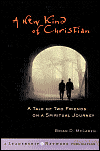
But I can’t help but wonder how much this material has altered their reasoning and philosophy of ministry. Are they still utilizing much of the material but not making public mention of these works? Are they more secretive now because some people are more privy to what is going on? One thing that really annoys me is that there are many things that simply will probably never be preached from the pulpit for fear of offending some people. I have also noticed a subtle tendency toward a shift to a more “conversational” dialogue style of teaching. I personally refuse to lead Bible studies consisting of a sort of round table style of discussion where everyone merely expresses their view of what they think a passage means to them. This is not a case where I do not encourage discussion. But I always begin with a determination of what a certain passage means within its context, and then open up to discussion on how it applies to our lives. It really does not matter what the Bible means to me or what it means to you. What matters is what did God mean when it was written and how does it apply to our lives.
These are certainly spiritually dangerous times in which we live. We need more than ever, to be like the first century Bereans in Acts 17:11, who diligently searched Scripture to verify the truth.
Here in the Columbus, Ohio area, we have LifeWay Christian Bookstores. One of the smaller branches is located just a few miles from my home and I go there frequently. As with many bookstores, there are both good and bad materials stocked there. I cringe every time I walk past the Bible section and see the “Biblezines” there on the shelf. Turning down another isle
 makes me cringe once again as I lay eyes on “smiley boy’s” (Joel Osteen) book, “Your Best Life Now”. But I have not run across any books by Brian McLaren and other well-known postmodern authors in the smaller store.
I do occasionally go into the LifeWay “mega store” at the north end of Columbus. That particular store stocks everything. That includes books by postmodern authors such as Doug Pagitt, Rob Bell, Brian McLaren and Leonard Sweet. Mainstream Evangelicalism is being infiltrated by the philosophy of these postmodern “thinkers”, more than anyone can imagine. Do not naively think that this postmodern thought is only limited to the “emerging” church. Just as many evangelical churches jumped on the bandwagon of the seeker-sensitive movement, they are now
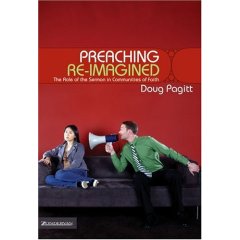 jumping on the postmodern fad exclaiming “us too!” While many may not currently be jumping in with both feet, they are nonetheless beginning to subtly adopt some of the teaching being promoted by the “emerging” crowd.
In the church that I currently attend, one of the members of the pastoral staff who was serving as the youth pastor at the time, was quoting out of Brian McLaren’s book, “A New Kind of Christian” to the youth group. This was told to me by someone in the church who assists with the youth ministry. This man asked me whether or not I was familiar with the material, since he reported that much of what was quoted seemed to be doctrinally off-base. I had seen the book in a bookstore a long time ago and picked it up briefly, but quickly decided that it was not worthwhile, so I put it back on the shelf and moved on. I usually do not spend much time reading heretical material. Time is much too precious to waste on nonsense. However, since this incident in our church, I pay a little more attention to these things to at least read enough of the material to discern what is being taught. After this issue was brought to my attention, I went and did research on the book and looked over the material more closely. The material was indeed heretical and introduced ideas that countered Biblical teaching. I put together the material gathered in my research and gave it to the particular gentleman that brought it to my attention. I then sent the research off to the youth pastor with a stern warning concerning the material. Before the McLaren incident, our pastor quoted out of one of Leonard Sweet’s books and even showed a picture of the book’s cover on the overhead screen in one of the Sunday morning services. At that time I was not very familiar with Sweet’s material either. Since that time I have not heard much mention of this material being used, and certainly nothing being quoted out of works such as Brian McLaren’s.
But I can’t help but wonder how much this material has altered their reasoning and philosophy of ministry. Are they still utilizing much of the material but not making public mention of these works? Are they more secretive now because some people are more privy to what is going on? One thing that really annoys me is that there are many things that simply will probably never be preached from the pulpit for fear of offending some people. I have also noticed a subtle tendency toward a shift to a more “conversational” dialogue style of teaching. I personally refuse to lead Bible studies consisting of a sort of round table style of discussion where everyone merely expresses their view of what they think a passage means to them. This is not a case where I do not encourage discussion. But I always begin with a determination of what a certain passage means within its context, and then open up to discussion on how it applies to our lives. It really does not matter what the Bible means to me or what it means to you. What matters is what did God mean when it was written and how does it apply to our lives.
These are certainly spiritually dangerous times in which we live. We need more than ever, to be like the first century Bereans in Acts 17:11, who diligently searched Scripture to verify the truth.
Wednesday, December 07, 2005
John MacArthur on the Importance of Doctrine.
John MacArthur is a guest blogger at the Pyromaniac today with a timely message on the importance of solid doctrine. At a time where we constantly hear the message that doctrine does not matter, Dr. MacArthur is expressing the importance of basing our lives on God’s truth. This is greatly needed, especially at a time where some are calling for a “New” Reformation, overemphasizing behavior over belief. The absence of biblical truth today has created a void in the Christian community that is being filled with unbiblical nonsense.
I have deep gratitude for MacArthur’s ministry, because it played a crucial role in helping me to understand and teach the Bible. People have asked me how I learned to understand and teach the truth. It was through the ministry of Grace to You and other solid Bible teachers (such as Alistair Begg) that helped shape my understanding of Scripture, coupled with the constant study of Scripture. Sadly, I have received little help from local church ministries. I can think of only a couple of local churches that I have been a part of over the years that really made an honest attempt at helping to equip me for ministry. Others have given lip service to the importance of training, but most of the time the training offered was centered on things like “how to handle difficult people”, “how to use ‘ice breakers’ in small groups”, etc., but nothing about understanding and teaching solid Bible doctrine.
The best advice I can give to anyone, is to immerse yourself in material written by solid men of the faith. Recognize the value of the material written by solid men of the past such as Charles Spurgeon and Jonathan Edwards. The theology from a “bunch of dead guys” is timeless truth that is just as relevant today – even more so. But most of all develop a fervent love for the Bible and study it with all your heart. (1 Peter 2:2) The Bible should be our ultimate guide. Don’t just follow the teaching of men. Filter whatever you are taught through Scripture. Learn to interpret the Bible within its proper context and mine the deep truths contained within its pages. Remember that you have access to the greatest teacher of the Bible at all times – the Holy Spirit! (John14:26; 16:13, 1 John 2:27)
I have deep gratitude for MacArthur’s ministry, because it played a crucial role in helping me to understand and teach the Bible. People have asked me how I learned to understand and teach the truth. It was through the ministry of Grace to You and other solid Bible teachers (such as Alistair Begg) that helped shape my understanding of Scripture, coupled with the constant study of Scripture. Sadly, I have received little help from local church ministries. I can think of only a couple of local churches that I have been a part of over the years that really made an honest attempt at helping to equip me for ministry. Others have given lip service to the importance of training, but most of the time the training offered was centered on things like “how to handle difficult people”, “how to use ‘ice breakers’ in small groups”, etc., but nothing about understanding and teaching solid Bible doctrine.
The best advice I can give to anyone, is to immerse yourself in material written by solid men of the faith. Recognize the value of the material written by solid men of the past such as Charles Spurgeon and Jonathan Edwards. The theology from a “bunch of dead guys” is timeless truth that is just as relevant today – even more so. But most of all develop a fervent love for the Bible and study it with all your heart. (1 Peter 2:2) The Bible should be our ultimate guide. Don’t just follow the teaching of men. Filter whatever you are taught through Scripture. Learn to interpret the Bible within its proper context and mine the deep truths contained within its pages. Remember that you have access to the greatest teacher of the Bible at all times – the Holy Spirit! (John14:26; 16:13, 1 John 2:27)
Friday, December 02, 2005
What I am Reading.
I have started reading a book entitled “Reclaiming the Center”, by Millard J. Erickson, Paul Kjoss Helseth and Justin Taylor, dealing with the influence of postmodernism on the evangelical church. This is going to be a good book that discusses in-depth the issues pertaining to how evangelicalism is being influenced by postmodernism. I believe this is something that every Christian needs to gain a keen understanding of. Postmodernism’s influence on evangelicalism is growing and it is not just limited to the emerging church movement. Many pastors are being influenced by the writing of men like Brian McLaren, Leonard Sweet and the late Stanley Grenz, to name a few. This influence is dangerous and is an imminent threat to the core foundations of biblical Christianity.
It is going to take me awhile to get through this book. I am really busy right now with school over the next couple of weeks. I am finishing up a semester and have a project and finals coming up. But I will eventually be posting some of the information as I go through the book. But it may be awhile. Between working full time, going to school, a wife and two small children, it is difficult to consistently have time to write clear, thoughtful posts.
Friday, November 25, 2005
The Peril of Spiritual Infidelity
Those who are trumpeting the message that behavior is more important than belief would do well to take a closer look at Scripture. Rather than disregard or hold belief at a level of lower importance, Scriptural truth should be the basis of our actions. In fact, the Bible never separates truth from practical application and a call to act on that truth. When Paul would teach doctrinal truth, he always connected the truth with practical action in the life of the believer. (2 Peter 3:10-12) He would present the truth in such a way as if to say, “in light of this, this is how we should live our lives.” If we would teach expositionally and present the truth within context, Christians would be able to note the connection. That is the beauty of true expositional teaching and the reason why it often becomes difficult to make this connection with the incessant barrage of topical teaching so prevalent today. It becomes too easy to pull verses out of context to essentially teach what we want and miss the whole point of the passage. Furthermore, it allows too much latitude to skip over passages of Scripture that a pastor just does not want to deal with, but would really be beneficial for the congregation to hear. It is too convenient for the pastor skip over anything he thinks would offend some people. My question is when did Jesus ever avoid certain truth because it was offensive?
The peril of not abiding by and defending God’s truth can be seen in the Lord’s condemnation in His letter to the church in Thyatira. The Bible teaches us that they were a church dominated by love and good works. In fact, their works continually kept increasing. But they had one major flaw; they tolerated false teaching in their midst. The Lord gives a very strong condemnation to Thyatira promising harsh judgment, unless they repent.
19 “I know your works, love, service, faith, and your patience; and as for your works, the last are more than the first. 20 Nevertheless I have a few things against you, because you allow that woman Jezebel, who calls herself a prophetess, to teach and seduce My servants to commit sexual immorality and eat things sacrificed to idols. 21 And I gave her time to repent of her sexual immorality, and she did not repent. 22 Indeed I will cast her into a sickbed, and those who commit adultery with her into great tribulation, unless they repent of their deeds. 23 I will kill her children with death, and all the churches shall know that I am He who searches the minds and hearts. And I will give to each one of you according to your works. (Revelation 2:19-23, NKJV™)
The terms associated with sexual immorality are often used in Scripture in reference to spiritual apostasy. (Leviticus 20:1-5, Leviticus 17:7, Deuteronomy 31:16, Exodus 34:15-16)They are certainly not flattering terms. Proverbs 7 provides a description of how a harlot cleverly seduces the undiscerning. If you want to get a vivid picture of the cunning tactics of a harlot, read Proverbs 7. The seductive qualities of false religion bear a striking resemblance, with spiritually deadly consequences.
“6For at the window of my house I looked out through my lattice, 7And I saw among the naive, And discerned among the youths A young man lacking sense, 8Passing through the street near her corner; And he takes the way to her house, 9In the twilight, in the evening, In the middle of the night and in the darkness. 10And behold, a woman comes to meet him, Dressed as a harlot and cunning of heart.”
(Proverbs 7:6-10, NASB®)
“21With her many persuasions she entices him; With her flattering lips she seduces him. 22Suddenly he follows her As an ox goes to the slaughter, Or as one in fetters to the discipline of a fool, 23Until an arrow pierces through his liver; As a bird hastens to the snare, So he does not know that it will cost him his life. 24Now therefore, my sons, listen to me, And pay attention to the words of my mouth. 25Do not let your heart turn aside to her ways, Do not stray into her paths. 26For many are the victims she has cast down, And numerous are all her slain. 27Her house is the way to Sheol, Descending to the chambers of death.”(Proverbs 7:21-27, NASB®)
In much the same fashion, believers are in the same dilemma today due to the prevailing shallow understanding of biblical truth. Unfortunately, believers are easily seduced by a spiritually that bears a resemblance to Christianity, but in reality, runs counter to Scripture. The charge that knowledge of the truth is not all that important does not square with the teaching of Scripture. Israel fell into the same peril due to their neglect of the truth and we would do well to take note of the error they fell into so that we do not make the same error. Spiritual naïveté is dangerous.
“18 Where there is no revelation, the people cast off restraint; But happy is he who keeps the law.”
(Proverbs 29:18, NKJV™)
The “revelation” spoken of here is referring to the revealed Word of God. Without the proclamation of God’s divinely inspired truth, people operate according to their own desires, which leads to the path of destruction.
The only remedy to avoid being taken in by the harlotry of false religion is to take heed to God’s Word. Knowledge of God’s Word produces wisdom and understanding. God is our heavenly Father who has given us His Word to keep us from falling victim to false teaching.
“ 1 My son, if you receive my words, And treasure my commands within you, 2 So that you incline your ear to wisdom, And apply your heart to understanding; 3 Yes, if you cry out for discernment, And lift up your voice for understanding, 4 If you seek her as silver, And search for her as for hidden treasures; 5 Then you will understand the fear of the LORD, And find the knowledge of God.”
(Proverbs 2:1-5, NKJV™)
“ 10 When wisdom enters your heart, And knowledge is pleasant to your soul, 11 Discretion will preserve you; Understanding will keep you, 12 To deliver you from the way of evil, From the man who speaks perverse things, 13 From those who leave the paths of uprightness To walk in the ways of darkness; 14 Who rejoice in doing evil, And delight in the perversity of the wicked; 15 Whose ways are crooked, And who are devious in their paths; 16 To deliver you from the immoral woman, From the seductress who flatters with her words, 17 Who forsakes the companion of her youth, And forgets the covenant of her God.”
(Proverbs 2:10-17, NKJV™)
The peril of not abiding by and defending God’s truth can be seen in the Lord’s condemnation in His letter to the church in Thyatira. The Bible teaches us that they were a church dominated by love and good works. In fact, their works continually kept increasing. But they had one major flaw; they tolerated false teaching in their midst. The Lord gives a very strong condemnation to Thyatira promising harsh judgment, unless they repent.
19 “I know your works, love, service, faith, and your patience; and as for your works, the last are more than the first. 20 Nevertheless I have a few things against you, because you allow that woman Jezebel, who calls herself a prophetess, to teach and seduce My servants to commit sexual immorality and eat things sacrificed to idols. 21 And I gave her time to repent of her sexual immorality, and she did not repent. 22 Indeed I will cast her into a sickbed, and those who commit adultery with her into great tribulation, unless they repent of their deeds. 23 I will kill her children with death, and all the churches shall know that I am He who searches the minds and hearts. And I will give to each one of you according to your works. (Revelation 2:19-23, NKJV™)
The terms associated with sexual immorality are often used in Scripture in reference to spiritual apostasy. (Leviticus 20:1-5, Leviticus 17:7, Deuteronomy 31:16, Exodus 34:15-16)They are certainly not flattering terms. Proverbs 7 provides a description of how a harlot cleverly seduces the undiscerning. If you want to get a vivid picture of the cunning tactics of a harlot, read Proverbs 7. The seductive qualities of false religion bear a striking resemblance, with spiritually deadly consequences.
“6For at the window of my house I looked out through my lattice, 7And I saw among the naive, And discerned among the youths A young man lacking sense, 8Passing through the street near her corner; And he takes the way to her house, 9In the twilight, in the evening, In the middle of the night and in the darkness. 10And behold, a woman comes to meet him, Dressed as a harlot and cunning of heart.”
(Proverbs 7:6-10, NASB®)
“21With her many persuasions she entices him; With her flattering lips she seduces him. 22Suddenly he follows her As an ox goes to the slaughter, Or as one in fetters to the discipline of a fool, 23Until an arrow pierces through his liver; As a bird hastens to the snare, So he does not know that it will cost him his life. 24Now therefore, my sons, listen to me, And pay attention to the words of my mouth. 25Do not let your heart turn aside to her ways, Do not stray into her paths. 26For many are the victims she has cast down, And numerous are all her slain. 27Her house is the way to Sheol, Descending to the chambers of death.”(Proverbs 7:21-27, NASB®)
In much the same fashion, believers are in the same dilemma today due to the prevailing shallow understanding of biblical truth. Unfortunately, believers are easily seduced by a spiritually that bears a resemblance to Christianity, but in reality, runs counter to Scripture. The charge that knowledge of the truth is not all that important does not square with the teaching of Scripture. Israel fell into the same peril due to their neglect of the truth and we would do well to take note of the error they fell into so that we do not make the same error. Spiritual naïveté is dangerous.
“18 Where there is no revelation, the people cast off restraint; But happy is he who keeps the law.”
(Proverbs 29:18, NKJV™)
The “revelation” spoken of here is referring to the revealed Word of God. Without the proclamation of God’s divinely inspired truth, people operate according to their own desires, which leads to the path of destruction.
The only remedy to avoid being taken in by the harlotry of false religion is to take heed to God’s Word. Knowledge of God’s Word produces wisdom and understanding. God is our heavenly Father who has given us His Word to keep us from falling victim to false teaching.
“ 1 My son, if you receive my words, And treasure my commands within you, 2 So that you incline your ear to wisdom, And apply your heart to understanding; 3 Yes, if you cry out for discernment, And lift up your voice for understanding, 4 If you seek her as silver, And search for her as for hidden treasures; 5 Then you will understand the fear of the LORD, And find the knowledge of God.”
(Proverbs 2:1-5, NKJV™)
“ 10 When wisdom enters your heart, And knowledge is pleasant to your soul, 11 Discretion will preserve you; Understanding will keep you, 12 To deliver you from the way of evil, From the man who speaks perverse things, 13 From those who leave the paths of uprightness To walk in the ways of darkness; 14 Who rejoice in doing evil, And delight in the perversity of the wicked; 15 Whose ways are crooked, And who are devious in their paths; 16 To deliver you from the immoral woman, From the seductress who flatters with her words, 17 Who forsakes the companion of her youth, And forgets the covenant of her God.”
(Proverbs 2:10-17, NKJV™)
Friday, November 11, 2005
What You Know Still Matters.
It seems that it is becoming popular to emphasize behavior over truth these days, that how you act is more important than what you know. I can understand some of the concern here and can appreciate the emphasis on our actions. I think that we have observed through the years examples of people who merely possess head knowledge, but exhibit little behavioral change. Their knowledge has no impact on their life because it has not been embedded in their heart. Scripture warns us not to be mere hearers of the word, but to be doers of the Word.
"22 But be doers of the word, and not hearers only, deceiving yourselves."
(James 1:22, NKJV™)
But the admonition is not to ignore the Word of God, but simply to take action on the Word. To dichotomize truth from behavior is plainly wrongheaded and misses the point that Scripture is teaching.
Yet, influential leaders such as Rick Warren are sending the message that what you know really is not all that important. In fact, he is calling for a so-called “New Reformation” based on behavior rather than on belief, implying that the Reformation was only concerned with knowledge. But this notion is ridiculous, for any amount of study of the Reformation reveals the reformers truly had a heart for God and desired that their lives lined up with God’s truth. Are we therefore to conclude that men like Jonathan Edwards and George Whitefield who stood for the doctrinal principles that were laid out during the Reformation were only concerned with head knowledge? Are we therefore to ignore the fact that their stand on Scriptural truth and the proclamation of that truth changed the hearts of men that sparked the Great Awakening? I wonder just how much of the writings of theses men Rick Warren has read. How about the multitudes of believers who have reached out to the poor and destitute, demonstrating Christ like love with the earnest desire that in the process they would share the truth of the gospel? Scripture does point out that we are to take the opportunity to take care of the needs of people. (Galatians 6:9-11)
"9)Let us not lose heart in doing good, for in due time we will reap if we do not grow weary.
10So then, while we have opportunity, let us do good to all people, and especially to those who are of the household of the faith."
(Galatians 6:9-11, NASB®)
Certainly, the church needs to be reminded to reach out to the needs of others. And, unfortunately, much of the church has had a tendency to become self-serving. However, nothing in Scripture teaches us to emphasize meeting social needs above ministering the truth of the gospel. Sidelining truth for social causes is taught nowhere in the Bible. Furthermore, Scripture does not declare that the church’s primary focus is to champion social causes. Scripture emphasize the need to diligently battle for the truth.
“3 Beloved, while I was very diligent to write to you concerning our common salvation, I found it necessary to write to you exhorting you to contend earnestly for the faith which was once for all delivered to the saints.”
(Jude 1:3, NKJV™)
"God has called us to enjoy and fellowship with each other and work together. We're all in this together," he said, adding Baptists can "celebrate our diversity and celebrate our unity."
“Warren: Global Baptists 'are all in this together' “
By Trennis Henderson
Biblical Recorder, July 28, 2005
“Urging Christians to pursue “a new reformation” in the 21st century, Rick Warren told delegates to the Baptist World Centenary Congress, “The first Reformation was about belief. This one needs to be about behavior.”
“We need a reformation of not creeds but deeds,” emphasized Warren, author of the best-selling book, “The Purpose Driven Church,” and one of the keynote speakers for the global meeting, celebrating the 100th anniversary of the Baptist World Alliance.”
“Rick Warren challenges Baptists to launch ‘new reformation’`“
By Trennis Henderson
Associated Baptist Press, 7/31/2005
But what Rick Warren is promoting is spirituality apart from biblical truth. Of course, he would deny this, but if you examine the tenets of what he is promoting, it very subtly undermines Scriptural truth. Rick Warren is promoting a unity that is not based on biblical truth. Rather, he is downplaying the need for upholding the truth of Scripture. It is interesting that he can call the toleration of unbiblical teaching “diversity”, and has no problem unifying with those like T.D. Jakes who departs from the biblical teaching of the trinity. Warren apparently also has no problem fellowshipping with those like Tony Campolo who disregard the biblical prohibition on homosexuality amongst many other unbiblical positions.
Rick Warren also openly ridicules the Southern Baptist Convention for withdrawing from the Baptist World Alliance over the continued left ward drift into liberal theological views. Not least of which is the growing acceptance of gay marriage in the BWA.
“During a July 28 press conference, Warren addressed a question about last year's decision by the Southern Baptist Convention (SBC), the largest BWA member, to withdraw membership and funding from BWA. "I think that was a mistake," he said flatly. "When the Southern Baptists pulled out funding, my wife and I wrote a check for $25,000 to BWA.
"I see absolutely zero reason in separating my fellowship from anybody," he said.
Noting he has theological differences with many of the diverse denominations that invite him to speak, Warren added, "That doesn't stop me from fellowshipping with them."
When he heard of the SBC's withdrawal, he added, "I thought, 'This is silly! Why would we separate ourselves from brothers and sisters in the world?'"”
The Biblical Recorder, July 28 2005
"22 But be doers of the word, and not hearers only, deceiving yourselves."
(James 1:22, NKJV™)
But the admonition is not to ignore the Word of God, but simply to take action on the Word. To dichotomize truth from behavior is plainly wrongheaded and misses the point that Scripture is teaching.
Yet, influential leaders such as Rick Warren are sending the message that what you know really is not all that important. In fact, he is calling for a so-called “New Reformation” based on behavior rather than on belief, implying that the Reformation was only concerned with knowledge. But this notion is ridiculous, for any amount of study of the Reformation reveals the reformers truly had a heart for God and desired that their lives lined up with God’s truth. Are we therefore to conclude that men like Jonathan Edwards and George Whitefield who stood for the doctrinal principles that were laid out during the Reformation were only concerned with head knowledge? Are we therefore to ignore the fact that their stand on Scriptural truth and the proclamation of that truth changed the hearts of men that sparked the Great Awakening? I wonder just how much of the writings of theses men Rick Warren has read. How about the multitudes of believers who have reached out to the poor and destitute, demonstrating Christ like love with the earnest desire that in the process they would share the truth of the gospel? Scripture does point out that we are to take the opportunity to take care of the needs of people. (Galatians 6:9-11)
"9)Let us not lose heart in doing good, for in due time we will reap if we do not grow weary.
10So then, while we have opportunity, let us do good to all people, and especially to those who are of the household of the faith."
(Galatians 6:9-11, NASB®)
Certainly, the church needs to be reminded to reach out to the needs of others. And, unfortunately, much of the church has had a tendency to become self-serving. However, nothing in Scripture teaches us to emphasize meeting social needs above ministering the truth of the gospel. Sidelining truth for social causes is taught nowhere in the Bible. Furthermore, Scripture does not declare that the church’s primary focus is to champion social causes. Scripture emphasize the need to diligently battle for the truth.
“3 Beloved, while I was very diligent to write to you concerning our common salvation, I found it necessary to write to you exhorting you to contend earnestly for the faith which was once for all delivered to the saints.”
(Jude 1:3, NKJV™)
"God has called us to enjoy and fellowship with each other and work together. We're all in this together," he said, adding Baptists can "celebrate our diversity and celebrate our unity."
“Warren: Global Baptists 'are all in this together' “
By Trennis Henderson
Biblical Recorder, July 28, 2005
“Urging Christians to pursue “a new reformation” in the 21st century, Rick Warren told delegates to the Baptist World Centenary Congress, “The first Reformation was about belief. This one needs to be about behavior.”
“We need a reformation of not creeds but deeds,” emphasized Warren, author of the best-selling book, “The Purpose Driven Church,” and one of the keynote speakers for the global meeting, celebrating the 100th anniversary of the Baptist World Alliance.”
“Rick Warren challenges Baptists to launch ‘new reformation’`“
By Trennis Henderson
Associated Baptist Press, 7/31/2005
But what Rick Warren is promoting is spirituality apart from biblical truth. Of course, he would deny this, but if you examine the tenets of what he is promoting, it very subtly undermines Scriptural truth. Rick Warren is promoting a unity that is not based on biblical truth. Rather, he is downplaying the need for upholding the truth of Scripture. It is interesting that he can call the toleration of unbiblical teaching “diversity”, and has no problem unifying with those like T.D. Jakes who departs from the biblical teaching of the trinity. Warren apparently also has no problem fellowshipping with those like Tony Campolo who disregard the biblical prohibition on homosexuality amongst many other unbiblical positions.
Rick Warren also openly ridicules the Southern Baptist Convention for withdrawing from the Baptist World Alliance over the continued left ward drift into liberal theological views. Not least of which is the growing acceptance of gay marriage in the BWA.
“During a July 28 press conference, Warren addressed a question about last year's decision by the Southern Baptist Convention (SBC), the largest BWA member, to withdraw membership and funding from BWA. "I think that was a mistake," he said flatly. "When the Southern Baptists pulled out funding, my wife and I wrote a check for $25,000 to BWA.
"I see absolutely zero reason in separating my fellowship from anybody," he said.
Noting he has theological differences with many of the diverse denominations that invite him to speak, Warren added, "That doesn't stop me from fellowshipping with them."
When he heard of the SBC's withdrawal, he added, "I thought, 'This is silly! Why would we separate ourselves from brothers and sisters in the world?'"”
The Biblical Recorder, July 28 2005
"Warren: Global Baptists 'are all in this together' "
By Trennis Henderson
It seems clearly apparent that to Rick Warren, doctrine really does not matter. He may talk about it and may discuss it with his congregation, but it seems to take a back seat in importance compared to the overemphasis on unity.
Certainly we should be concerned for the needs of others and the church should play an active role. This can open up opportunities to share the gospel. But the gospel and biblical truth should be of primary importance, not secondary. Just look at what happened to nearly every mainline denomination that dropped Scriptural truth for the social gospel. Each one has derailed into apostasy. And this is exactly where mainstream Evangelicalism is headed today.
Scripture is replete with passages that emphasize the need to know and meditate on God’s truth. After all, how can you act on what you do not know? A brief survey of the Christian landscape today reveals that this lack of knowledge of the Word of God is destructive. The prevailing absence of a biblical world view amongst Christians is alarming, not to mention the widespread sin and worldliness.
Often referred to in Scripture as the “law”, “precepts”, “statutes” and “ordinances”, God’s Word is to be diligently taught among His people.
6"These words, which I am commanding you today, shall be on your heart.
7You shall teach them diligently to your sons and shall talk of them when you sit in your house and when you walk by the way and when you lie down and when you rise up.
8You shall bind them as a sign on your hand and they shall be as frontals on your forehead.
9You shall write them on the doorposts of your house and on your gates.”
(Deuteronomy 6:6-9, NASB®)
18"You shall therefore impress these words of mine on your heart and on your soul; and you shall bind them as a sign on your hand, and they shall be as frontals on your forehead.
19"You shall teach them to your sons, talking of them when you sit in your house and when you walk along the road and when you lie down and when you rise up.
(Deuteronomy 11:18-19, NASB®)
"1How blessed are those whose way is blameless, Who walk in the law of the LORD.
2How blessed are those who observe His testimonies, Who seek Him with all their heart. 3They also do no unrighteousness; They walk in His ways.
4You have ordained Your precepts, That we should keep them diligently.
5Oh that my ways may be established To keep Your statutes!"
(Psalm 119:1-5, NASB®)
Consistently, Scripture teaches that the Word of God is to be held closely to our heart. It is not something to be regarded with superficial understanding. The term “heart” as it is used in Scripture means more than in an emotional sense. Heart refers to both, mind and emotions, the center of man’s inward life that ultimately governs his rational and emotional functions. Unfortunately, much of the church today tries to dichotomize mind and emotions, but the Scripture refers to both.
Lack of guidance from God’s truth leaves the believer to follow their own devices and seek their own understanding. Vulnerability to sin prevails. The only way that a believer can purify their walk is by the Word of God.
"9Wherewithal shall a young man cleanse his way? by taking heed thereto according to thy word. "
(Psalm 119:9, KJV)
"11Thy word have I hid in mine heart, that I might not sin against thee."
(Psalm 119:11, KJV)
I have more to post on this soon.
Thursday, November 03, 2005
A Change in Plans.
I know that in a previous post I mentioned that I wanted to do a post on Leonard Sweet and planned on doing that sometime soon. Well, it is going to be awhile before I get around to doing that. Not because I don’t think that it is important, but I need a break from peering through the sewer drain of the emergent sewer of heresy, before I am overcome from the toxic fumes emitted from the doctrinal ooze! I need a break before I start banging my head against the wall! It is very discouraging to read some of the absolute absurd teaching.
Sunday, October 30, 2005
Misconceptions We Are Led To Believe
I was listening to Part 1 of an interesting three-part series on Focus on the Family a week ago entitled, “Do You Have a Christian Worldview”? (If you go out to OnePlace.com under the broadcast archives, scroll down until you see the title of the broadcast) It was concerning how youth are hungry for spiritual truth, and included Josh McDowell and Lee Strobel. What really stood out in the program was the fact that young people, contrary to the popular misconception produced by postmodern culture, really are indeed interested in truth. Apparently Lee Strobel was told halfway though a discussion he was having with an unnamed “scholar” concerning his book, "The Case for Christ", that young people would not buy his book because youth are not interested in truth today. Yet the largest group he receives letters from stating that they came to faith in Christ as a result of the book, are from the 16-24 age group! So much for the folly of postmodernism!
So much of this foolishness could be avoided by simply believing the Bible. Scripture is clear that the chosen vehicle for delivering the message of saving faith is through the simple preaching of God’s Word. Unfortunately, man thinks that he is smarter than God and can improve upon God’s simple command. Paul claimed to know nothing except Christ and Him crucified (1 Corinthians 2:2). This is what Paul preached.
It is interesting how we are led to believe many things that upon closer scrutiny are simply not true. Take for instance the notion that in order to reach the lost, we need to find out what the “seeker” wants, and then tailor our message and ministry to meet those wants in order to attract people to the Gospel. This is what led to the plethora of marketing methods that have been imposed upon the church, under the premise that unless we adopt those methods, the church will become irrelevant and wither and die. This has become the battle cry for the past couple of decades. A look at the results would indicate that the effect of these methods has had a negative effect on the health of the church.
Now we are told that unless the church jumps on the bandwagon and learns to ride the wave of postmodernism, the church will essentially be swept away into irrelevancy. We have been in this position before; the admonition to change or die is once again upon us. But we need to look at where we have been and closely examine the results. We must scrutinize everything with the text of Scripture. If we do not abide by God’s Truth, we will be led further away from God. If one were to judge success based purely on numbers, it would seem that we have experienced success. But numbers are deceiving. Even the statistics prove that we have failed miserably. Even though we have built bigger and bigger mega-churches, according to Barna Research, while the population has only increased a mere 15%, the number of unchurched has increased by a whopping 92% since 1991. Furthermore, Biblical illiteracy has run rampant and worldliness has taken root.
But God’s Truth is spiritually discerned and it is God who opens the eyes of man to His truth. This is not a result of man’s clever formulas and methodologies.
“18For the word of the cross is foolishness to those who are perishing, but to us who are being saved it is the power of God.
19For it is written,
"I WILL DESTROY THE WISDOM OF THE WISE,
AND THE CLEVERNESS OF THE CLEVER I WILL SET ASIDE."
20Where is the wise man? Where is the scribe? Where is the debater of this age? Has not God made foolish the wisdom of the world?
21For since in the wisdom of God the world through its wisdom did not come to know God, God was well-pleased through the foolishness of the message preached to save those who believe.” (1 Corinthians 1:18-21; NASB®)
“9 But as it is written:
“Eye has not seen, nor ear heard,
Nor have entered into the heart of man
The things which God has prepared for those who love Him.”
10 But God has revealed them to us through His Spirit. For the Spirit searches all things, yes, the deep things of God. 11 For what man knows the things of a man except the spirit of the man which is in him? Even so no one knows the things of God except the Spirit of God. 12 Now we have received, not the spirit of the world, but the Spirit who is from God, that we might know the things that have been freely given to us by God.13 These things we also speak, not in words which man’s wisdom teaches but which the Holy Spirit teaches, comparing spiritual things with spiritual. 14 But the natural man does not receive the things of the Spirit of God, for they are foolishness to him; nor can he know them, because they are spiritually discerned”
(1 Corinthians 2:9-14, NKJV™)
“3 But even if our gospel is veiled, it is veiled to those who are perishing, 4 whose minds the god of this age has blinded, who do not believe, lest the light of the gospel of the glory of Christ, who is the image of God, should shine on them.” (2 Corinthians 4:3, NKJV™)
It is God who chooses and grants salvation. In John Chapter 6, many of the multitudes could not grasp the words of Jesus and ultimately turned away. Jesus does not come back with clever words or fleshly appeals in order to win them back. He does not try to find out what things interest them in an attempt to lure them in. He merely underscores the fact that it is God the Father who grants salvation to those who will be saved.
“All that the Father gives Me will come to Me, and the one who comes to Me I will by no means cast out.” (John 6:37, NKJV™)
“63 It is the Spirit who gives life; the flesh profits nothing. The words that I speak to you are spirit, and they are life. 64 But there are some of you who do not believe.” For Jesus knew from the beginning who they were who did not believe, and who would betray Him. 65 And He said, “Therefore I have said to you that no one can come to Me unless it has been granted to him by My Father.” 66 From that time many of His disciples went back and walked with Him no more.” (John 6:63-66, NKJV™)
No amount of human persuasion alone can save anyone.
There is no record in Scripture that the apostles employed clever methodologies. Their tactic was simple; just boldly proclaim the truth and abide by God’s Word. Dr. James MacDonald points this out in an article describing his philosophy of ministry.
“The focus on human persuasion in evangelism has produced an array of church growth methods that could be accurately sub-titled "how to fill your church with tares." The early church appears to have placed no emphasis on evangelistic methodology. Their approach was simple and powerful, they were BOLD! Many times in the New Testament the Greek word translated boldness which literally means "openness" or "candor," to speak freely especially in the face of hostility. It does not imply using a loud voice or an obnoxious presentation of spiritual truth that disregards the willingness of the listener. Boldness is the Spirit-directed conviction that one must share the good news of Jesus Christ and not fear the response or reproach of the listener. Spirit-led boldness has been replaced in our day by "the fear of man which brings a snare" (Proverbs 29:25).”
(from Pillar Four in “The Four Pillars” by James MacDonald)
The Scriptural command is simple;
"2 Preach the word! Be ready in season and out of season. Convince, rebuke, exhort, with all longsuffering and teaching." (2 Timothy 4:2, NKJV™)
This is to take place whether of not it is popular, for verses 3 and 4 tell us that the time will come when people will no longer tolerate sound doctrine. The term “preach”, means to proclaim something publicly and openly, with urgency, a message that needs to be heeded and obeyed. Unfortunately, much of what is passed off as “preaching” today is nothing more than casual, conversational dialogue. It is interesting that we seldom hear this passage proclaimed in many churches today. The Bible does not teach that since people do not want to hear truth, we therefore should water down or dress up the truth to make it palatable.
Greg Laurie, who pastors Harvest Christian Fellowship in Riverside, California, also did not follow the clever philosophy of the church growth movement. His book, "The Upside Down Church", tells of how they simply followed the Bible and actually did the opposite of what church growth experts recommend. Yet the church grew tremendously. I need to read that book again; unfortunately I will need to purchase another since the book was destroyed some time ago when our basement flooded. Tim Challies has done a good review of this book.
The church desperately needs to get back to the simple truth of Scripture, rather than following the latest clever formulas and philosophies produced by men. Our duty is simply to proclaim the message of the Cross to as many as possible. It is the sovereign God who brings about saving faith, not the clever techniques of man.
 halfway though a discussion he was having with an unnamed “scholar” concerning his book, "The Case for Christ", that young people would not buy his book because youth are not interested in truth today. Yet the largest group he receives letters from stating that they came to faith in Christ as a result of the book, are from the 16-24 age group! So much for the folly of postmodernism!
So much of this foolishness could be avoided by simply believing the Bible. Scripture is clear that the chosen vehicle for delivering the message of saving faith is through the simple preaching of God’s Word. Unfortunately, man thinks that he is smarter than God and can improve upon God’s simple command. Paul claimed to know nothing except Christ and Him crucified (1 Corinthians 2:2). This is what Paul preached.
It is interesting how we are led to believe many things that upon closer scrutiny are simply not true. Take for instance the notion that in order to reach the lost, we need to find out what the “seeker” wants, and then tailor our message and ministry to meet those wants in order to attract people to the Gospel. This is what led to the plethora of marketing methods that have been imposed upon the church, under the premise that unless we adopt those methods, the church will become irrelevant and wither and die. This has become the battle cry for the past couple of decades. A look at the results would indicate that the effect of these methods has had a negative effect on the health of the church.
Now we are told that unless the church jumps on the bandwagon and learns to ride the wave of postmodernism, the church will essentially be swept away into irrelevancy. We have been in this position before; the admonition to change or die is once again upon us. But we need to look at where we have been and closely examine the results. We must scrutinize everything with the text of Scripture. If we do not abide by God’s Truth, we will be led further away from God. If one were to judge success based purely on numbers, it would seem that we have experienced success. But numbers are deceiving. Even the statistics prove that we have failed miserably. Even though we have built bigger and bigger mega-churches, according to Barna Research, while the population has only increased a mere 15%, the number of unchurched has increased by a whopping 92% since 1991. Furthermore, Biblical illiteracy has run rampant and worldliness has taken root.
But God’s Truth is spiritually discerned and it is God who opens the eyes of man to His truth. This is not a result of man’s clever formulas and methodologies.
“18For the word of the cross is foolishness to those who are perishing, but to us who are being saved it is the power of God.
19For it is written,
"I WILL DESTROY THE WISDOM OF THE WISE,
AND THE CLEVERNESS OF THE CLEVER I WILL SET ASIDE."
20Where is the wise man? Where is the scribe? Where is the debater of this age? Has not God made foolish the wisdom of the world?
21For since in the wisdom of God the world through its wisdom did not come to know God, God was well-pleased through the foolishness of the message preached to save those who believe.” (1 Corinthians 1:18-21; NASB®)
“9 But as it is written:
“Eye has not seen, nor ear heard,
Nor have entered into the heart of man
The things which God has prepared for those who love Him.”
10 But God has revealed them to us through His Spirit. For the Spirit searches all things, yes, the deep things of God. 11 For what man knows the things of a man except the spirit of the man which is in him? Even so no one knows the things of God except the Spirit of God. 12 Now we have received, not the spirit of the world, but the Spirit who is from God, that we might know the things that have been freely given to us by God.13 These things we also speak, not in words which man’s wisdom teaches but which the Holy Spirit teaches, comparing spiritual things with spiritual. 14 But the natural man does not receive the things of the Spirit of God, for they are foolishness to him; nor can he know them, because they are spiritually discerned”
(1 Corinthians 2:9-14, NKJV™)
“3 But even if our gospel is veiled, it is veiled to those who are perishing, 4 whose minds the god of this age has blinded, who do not believe, lest the light of the gospel of the glory of Christ, who is the image of God, should shine on them.” (2 Corinthians 4:3, NKJV™)
It is God who chooses and grants salvation. In John Chapter 6, many of the multitudes could not grasp the words of Jesus and ultimately turned away. Jesus does not come back with clever words or fleshly appeals in order to win them back. He does not try to find out what things interest them in an attempt to lure them in. He merely underscores the fact that it is God the Father who grants salvation to those who will be saved.
“All that the Father gives Me will come to Me, and the one who comes to Me I will by no means cast out.” (John 6:37, NKJV™)
“63 It is the Spirit who gives life; the flesh profits nothing. The words that I speak to you are spirit, and they are life. 64 But there are some of you who do not believe.” For Jesus knew from the beginning who they were who did not believe, and who would betray Him. 65 And He said, “Therefore I have said to you that no one can come to Me unless it has been granted to him by My Father.” 66 From that time many of His disciples went back and walked with Him no more.” (John 6:63-66, NKJV™)
No amount of human persuasion alone can save anyone.
There is no record in Scripture that the apostles employed clever methodologies. Their tactic was simple; just boldly proclaim the truth and abide by God’s Word. Dr. James MacDonald points this out in an article describing his philosophy of ministry.
“The focus on human persuasion in evangelism has produced an array of church growth methods that could be accurately sub-titled "how to fill your church with tares." The early church appears to have placed no emphasis on evangelistic methodology. Their approach was simple and powerful, they were BOLD! Many times in the New Testament the Greek word translated boldness which literally means "openness" or "candor," to speak freely especially in the face of hostility. It does not imply using a loud voice or an obnoxious presentation of spiritual truth that disregards the willingness of the listener. Boldness is the Spirit-directed conviction that one must share the good news of Jesus Christ and not fear the response or reproach of the listener. Spirit-led boldness has been replaced in our day by "the fear of man which brings a snare" (Proverbs 29:25).”
(from Pillar Four in “The Four Pillars” by James MacDonald)
The Scriptural command is simple;
"2 Preach the word! Be ready in season and out of season. Convince, rebuke, exhort, with all longsuffering and teaching." (2 Timothy 4:2, NKJV™)
This is to take place whether of not it is popular, for verses 3 and 4 tell us that the time will come when people will no longer tolerate sound doctrine. The term “preach”, means to proclaim something publicly and openly, with urgency, a message that needs to be heeded and obeyed. Unfortunately, much of what is passed off as “preaching” today is nothing more than casual, conversational dialogue. It is interesting that we seldom hear this passage proclaimed in many churches today. The Bible does not teach that since people do not want to hear truth, we therefore should water down or dress up the truth to make it palatable.
Greg Laurie, who pastors Harvest Christian Fellowship in Riverside, California, also did not follow the clever philosophy of the church growth movement. His book, "The Upside Down
 Church", tells of how they simply followed the Bible and actually did the opposite of what church growth experts recommend. Yet the church grew tremendously. I need to read that book again; unfortunately I will need to purchase another since the book was destroyed some time ago when our basement flooded. Tim Challies has done a good review of this book.
 The church desperately needs to get back to the simple truth of Scripture, rather than following the latest clever formulas and philosophies produced by men. Our duty is simply to proclaim the message of the Cross to as many as possible. It is the sovereign God who brings about saving faith, not the clever techniques of man.
Thursday, October 20, 2005
A Reality Show for “Preachers”?

Well it looks as if American religion has stooped to a new low. A new reality TV show, “Pulpit Masters” is set to air late this fall on TLC (The Learning Channel). They are currently looking for people to audition for a slot in the 10-part, inspirational series. The new series sets out to reveal the next great “preacher”. However, this is not necessarily just for preachers with a Christian message, but for anyone with a “unique and positive message” that they want to share. You merely need to be inspirational, not biblical. The website advertising the show claims that “We’re offering all comers of all denominations a chance to share their own spiritual message and reach out to an audience of millions.” Those that are welcome include “anyone with the desire to stand before an audience and share their own spiritual insights and message.” Those that are not welcome are those sharing a message “of hate, violence, superiority or any other negative ideologies and beliefs.” Of course, that can be interpreted many different ways. I would imagine that those who desire to proclaim the true biblical message of the straight and narrow way to salvation through the finished work of the cross of Christ are probably not going to be very welcome. Perhaps a message with a vaguely veiled message of the gospel would be tolerated, but not the straight-forward message of the need to die to oneself and repent of sin.
Of course, with the current climate of American Christianity, nothing should shock us. Regardless, the notion of competing with all the glitz of an American Idol style of contest is sickening to say the least. If you can imagine the contestants polishing up their routine and dressed in their slick, glitzy attire. This is nothing more than man’s effort and wisdom, not the power of God. What is sad is that there are probably going to be plenty of Evangelicals involved in this.
What a far cry this is from what the apostle Paul wrote in 1 Corinthians 2: 1-5,
“1 And I, brethren, when I came to you, did not come with excellence of speech or of wisdom declaring to you the testimony of God. 2 For I determined not to know anything among you except Jesus Christ and Him crucified. 3 I was with you in weakness, in fear, and in much trembling. 4 And my speech and my preaching were not with persuasive words of human wisdom, but in demonstration of the Spirit and of power, 5 that your faith should not be in the wisdom of men but in the power of God.” (1 Corithians 2:1-5, NKJV™)
It was Paul’s reliance on God’s power, not his own effort and ability that contributed to the effectiveness of his ministry.
“7But we have this treasure in earthen vessels, so that the surpassing greatness of the power will be of God and not from ourselves;”(2 Corinthians 4:7, NASB®)
Paul viewed himself as lowly and common encumbered with frailty. But this weakness does not hinder the messenger, but rather it is the power of God that allows His work to be accomplished through frail man. But this weakness is what is essential for God’s power and glory to be seen.
The type of humbleness that Paul displayed is something that is scarce in the evangelical landscape today. Much of what takes place today reeks with man’s arrogance and pride. This robs people from experiencing the true, transforming power of God. It is also a significant hindrance to experiencing true revival. We must strive for humility if we truly want to be used of God.
“6Therefore humble yourselves under the mighty hand of God, that He may exalt you at the proper time,”(1 Peter 5:6, NASB®)
Scott Hill over at Fide-O wrote a good post on the lack of humility in the church, especially in the arena of Christian music.
The message that “Pulpit Masters” sends is contradictory to the Word of God; that fame, fortune and worldly wisdom based on man’s effort is what is needed to influence and change the world. What is really needed is the life changing message of Christ and Him crucified and the solid proclamation of God’s Word.
Wednesday, October 12, 2005
So Much to Post, So Little Time.
There are several things that I want to write about, but I have been quite busy lately and have not had much time to do so. Things should be settling down now, so hopefully I will have a little more time to write some posts. When I first started blogging, I wondered what I would write about and if I would consistently be able to come up with enough subjects to post about. Now I have a whole list of things that I want to write about and the list keeps growing! Now I just need to find the time to sit down and focus so that I can research and write some intelligent posts.
I want to write some posts concerning Leonard Sweet. He is another postmodern author who has become influential with many in the Christian community. While Brian McLaren is one of the foremost spokesmen for the emerging church, Leonard Sweet is also having a profound influence on many churches that are not necessarily identified as “emerging”. But in my estimation, Sweet’s philosophy and teaching is just as dangerous. I hope to post this information soon.
I want to write some posts concerning Leonard Sweet. He is another postmodern author who has become influential with many in the Christian community. While Brian McLaren is one of the foremost spokesmen for the emerging church, Leonard Sweet is also having a profound influence on many churches that are not necessarily identified as “emerging”. But in my estimation, Sweet’s philosophy and teaching is just as dangerous. I hope to post this information soon.
Wednesday, October 05, 2005
Emerging Christian “Hippies”
Well, it seams that what the emerging crowd is actually doing is taking a nostalgic stroll back in time to the ‘60s. Scott Hill over at Fide-O, in his post, “Things That Make You Go HUH?”, mentioned in his closing statement “The emergent “conversation” is nothing but a bunch of “christian” hippies trying to be cool”. This is quite fitting and a good analogy to the emergent menagerie. He is not alone in being at a loss to clearly define the Emergent church. None of the rest of us can come up with a clear definition either. Neither can the “emergents”. And, just like rebellious adolescents, the emerging crowd is still trying to “find” themselves and have no clue about what they want to be when they grow up. Of course, it seems that the emerging folks take pride in that fact, as if the inability to define them means that they are beyond scrutiny. After all, according to them, they are still just a “conversation”. Not so! Let’s put it this way. If you were walking down the street and observed an unknown hideous substance oozing from around a sewer drain, you certainly would not need to clearly define what the substance was in order to come to the conclusion that you probably should not touch it. Anyone with a minimal amount of common sense would determine that it is probably not good for their well-being to even touch it, let alone ingest the stuff! After all, consider the source – it would be coming from a sewer. The same goes with most of the teaching of the emerging crowd. What is “oozing” from the movement is definitely not good for anyone’s well-being.
We can only hope that these emerging “hippies” will someday awaken from their drunken stupor induced from the copious amounts of their intoxicating postmodern brew, and exlaim (to borrow the line from Pecadillo’s blog), “I drank what?!”
We can only hope that these emerging “hippies” will someday awaken from their drunken stupor induced from the copious amounts of their intoxicating postmodern brew, and exlaim (to borrow the line from Pecadillo’s blog), “I drank what?!”
Subscribe to:
Posts (Atom)